The importance of getting ‘in market’, building vs bragging in public, and letting your subconscious work on your marketing (and music) for you
Words: Adam Ketterer – Founder
Date: 8th July 2026
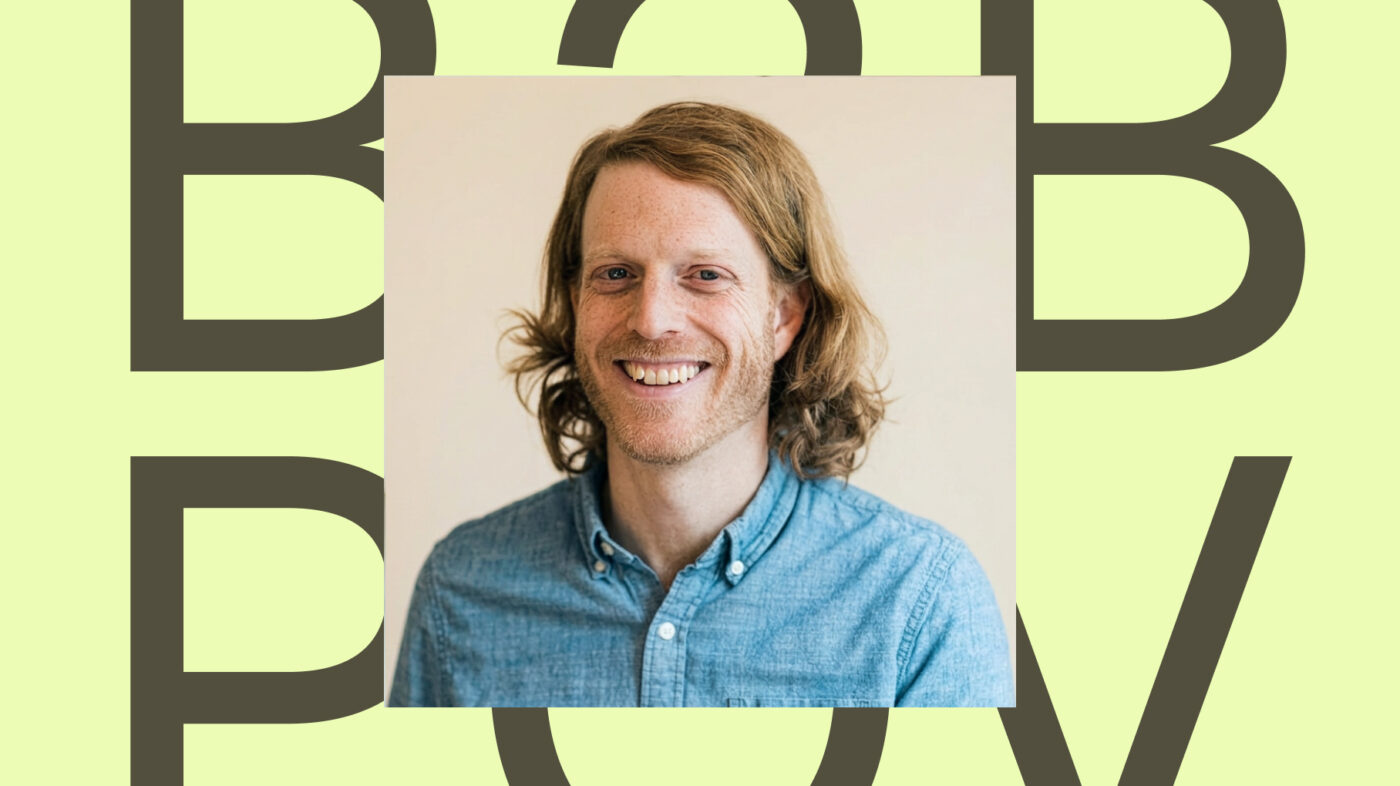
Jon Itkin is the founder-operator of In The Kitchen, a positioning consultancy with a healthy bias for action, which Jon describes as getting the work in market. I’ve been an admirer of his no-nonsense approach to the work of positioning – which he rightly believes is the work that happens after the workshops and sprints and whatever else people often mistake for the actual job at hand.
So it was a pleasure to talk shop with him, but also to discuss things like how the subconscious mind helps him work (and write songs), and how LinkedIn mostly makes him cringe.
The Q&A below is a written-up version of a Zoom conversation, edited slightly for brevity and to cut my ums and ahs. Here are some highlights you can skip to:
- “It bothers me when people don’t get in market.”
- “When I see service businesses publishing their revenue, I just cringe.”
- Building in public versus bragging in public
- Music and marketing: the work of the subconscious
- From brand bullsh*t to branding as a marketing technique
- Getting on their day-zero shortlist
- Brand love is bullsh*t
- When measurement goes too far
- You are probably not winning because of your product
- The four Cs of competitive advantage
- How to counteract the Fear of F*cking Up
- Positioning Jon
Adam Ketterer: I feel like my first question should be: Are you in the kitchen right now? Is there a story behind your company name? Is that where it started?
Jon Itkin: The name In the Kitchen – I’d love to take all kinds of credit for the deep, intricate subtlety behind it, but it just kind of came to me in the moment. I do think that there is some symbolism there.
I didn’t want to just name it Jon Itkin, because I wasn’t sure what I was creating, and I’m still not sure. You think to yourself, maybe I’ll start publishing more content. Or maybe I’ll start creating some type of coursework or course material. Or maybe it’ll turn into a bigger agency where lots of people work for me. So I wanted to have flexibility, and I wanted a name.
I wanted it to be evocative and stand out. And with In the Kitchen – if you’re at a party, where’s the interesting conversation? It’s always in the kitchen. If you’re messing with the recipe, where are you? You’re in the kitchen. If you’re cooking up something glorious, where are you? You’re in the kitchen. There’s a baseball metaphor where, when you throw a strike right in the center of the strike zone, they call that in the kitchen.
There’s just a lot of reasons. And I love to cook, and I’m always in my kitchen, and so it just personally makes me smile. And then somebody actually pointed this out – I so wish I could take credit for this – but the abbreviation ITK is the first three letters of my last name.
AK: That’s cool. And I like the optionality of not quite knowing what might become of it. So give it a name and see where it goes. And what I like about what I read on your site was how you’re quite candid about where you add value.
“It bothers me when people don’t get in market.”
JI: So I’ve been an agency person for most of my career. My company is first and foremost a positioning consultancy. I want to work with B2B companies, mostly tech companies, to help them think through and solve positioning problems.
But I also want to be honest about what it actually takes to solve a positioning problem.
And it’s not just a consultant in a conference room who solves it. You have to act. You have to do things. You have to get in market. I’m very passionate about getting in market.
It bothers me when people don’t get in market, because I feel like I just haven’t done my job. We collectively haven’t done our job of fixing positioning if we’re not in market doing things, saying things, making things, shipping content, pushing ideas.
And so I built In the Kitchen to do what I would say is that initial thrust of getting in market. So I’m not trying to be a design agency. I’m not trying to be even a brand agency or a big creative agency.
But I’m trying to do the things that it takes to get us in market. So we do the positioning work. We think it through. We get the alignment. We drive the consensus. Then we shape the message. We make messaging and deliver the messaging in a couple of different types of formats that help us get in market through a couple of sort of basic channels like sales enablement, website homepage – just really basic stuff.
And then a lot of the time, people want to invest in a more impactful brand, a visual and verbal brand that communicates this new positioning, this sharpened message.
And so I built that into my company because it really, honestly, was because of demand. It wasn’t like I necessarily thought I was gonna do that on day one. But I could see that this is what people really want to do. And they would ask, and I would say, “Well, sure, we can do that” – which is definitely a tricky line to take when you’re in a consulting business. It can break the coherence of your business. I am mindful about that.
AK: Yeah, totally. And yeah, I feel you on that point. I’m one of two owners of our agency, and we’re kind of complementary in a way, because Duncan is often more ambitious about being a fuller-service agency (which we are in many ways), and I’m usually like, “Maybe we should niche down more.” So it’s quite nice to have that balance.
JI: That’s a good thing. That’s a good tension to have.
“When I see service businesses publishing their revenue, I just cringe.”
AK: And I like that you’re occasionally doing that build-in-public thing, but not in the stereotypical LinkedIn way. I wouldn’t even say it’s about being humble. You’re just no-bullshit about it.
JI: Yeah, the build-in-public thing. I actually have a little bit of sensitivity around it because I don’t really like being a teardown guy. I really don’t. But I just have to say one thing about this build-in-public thing.
To me, building in public as a service business is pretty specific, and it’s not like building in public for a tech company. When I see service businesses quote-unquote building in public and publishing their revenue, I just cringe. I think that’s cringey. I think it’s cringey for a bunch of reasons.
If you’re a service business and you publish your revenue and you have employees, underpaid graphic designers can do math too, by the way. There’s a history in the agency business and service business of having the owner of the agency roll up in his brand new Mercedes and everyone else in the company is making barely more than they would managing a McDonald’s.
But it’s just cringey. I just think that’s like, if you have people work for you and you publish all your revenue and stuff, you’re just sort of being like, hey, look at all the money I’m making, and it’s all going to me and not to you.
Building in public versus bragging in public
But then, on the other side – which I think is probably it – it’s like LinkedIn is full of struggling consultants and people who are having a hard time, and a lot of this build-in-public stuff to me just feels like brag in public, not build in public. You’re just basically blowing yourself up and fueling this sense of jealousy. Guess what jealousy does on LinkedIn? It drives engagement. Negative emotions like jealousy drive engagement. They do. They make people stop. They make people look. They make people feel.
Okay, so that’s one way you could do it. One way to drive engagement is to make all the fellow wannabe consultants like you feel jealous of your shining success. And I just find that to be not something I want to do.
For me, what is more interesting is to share your best stuff in public, create your best tools in public, try to publicly work out the best solutions to the consistent problems you’re facing, develop resources for other people to solve the problems that you solve, similar to how you solve them. Those are the kinds of things I find much more interesting.
AK: I know you’ve said that, while you have won leads through LinkedIn, they can be very hit and miss as leads.
JI: Yeah I’m on LinkedIn, and I’m publishing and hustling. And I’ve gotten some very good clients out of LinkedIn – honestly. Very great relationships, and great stuff has happened for me as a direct result of LinkedIn. But in general the quality of leads that come via referrals is higher.
My feeling about the LinkedIn thing is sort of like, we have this mythology that’s being sold to us: that you’re just gonna generate all these leads. And then you have all these LinkedIn people saying, look at me, I’m generating all these leads. And then there are all these people selling these courses and like, “Oh, you can do it too.” And when do you get to the leads? It’s just hustle all the way down.
Well, I just think it’s much more complicated than that.But if you actually think about what my LinkedIn presence is actually doing for me, it’s definitely supporting referrals, keeping the other ones warm.
Music and marketing: the work of the subconscious
AK: I also saw somewhere that you have another life as a musician, right? And I wondered if your work as a musician and your work as a marketer ever impact one another in interesting ways?
JI: I actually think so. I’m a songwriter, and I’m just really passionate about writing songs. I’ve written a lot of them, and there are different points in my life when I was less encumbered. I would write just a lot. I’d just walk out the door and come back and have a new song.
And some of the songs I felt like were really—I was really proud of, and I would say, damn, wow, I like that one. I’m really glad I wrote that, and I’m excited to perform it and record it or whatever. But I was always like, how did I do that? And I didn’t really know, to be honest with you. It would come in like a lightning bolt. Like I’d go for a run, then I’d come home, and I’d open my notebook and be like boom, I’m writing this thing, and it’s like I can hear it and it’s all coming. It’s sort of arriving mostly formed in my mind.
And it took me a long time, like a really long time, to actually understand what that is. You think it’s like magic or something. It’s like, wow, I’m tapped into some magical fairy dust in the world. But actually all it really is, is your creative subconscious working for you when you are not asking it to.
And so to your point about being in the kitchen and that’s when ideas happen: the most powerful thing I’ve ever learned from being a creative in music and other things as well is that your subconscious is doing the work for you, and your job is to get out of the way and just let it work.
And so I try to do that. I try to create the conditions for my creative subconscious to do work for me. Sometimes better than others. But that’s the best trick in my entire box of tricks.
From brand bullsh*t to branding as a marketing technique
AK: That’s very cool. [Anyone who’s interested in this kind of thing should read A Technique for Producing Ideas by James Webb Young.]
I like what you’ve said about being allergic to the B word: brand. It’s like when you mention the word “wedding” and suddenly everyone charges you 100% more for flowers or food.
I’m the same, and I struggle with it, seeing terms like brand and positioning used interchangeably or incorrectly. And I’ve been guilty of not properly defining my terms myself. It took me like 10 years, then sitting down and writing it down for my own agency, to be like, what do I actually mean?
JI: No, that’s a good thing to do. I think it’s a good move.
AK: So I like the fact that you obviously sweat this stuff, especially “brand”.
JI: I do. I have some conflicts around it. I’m so sick of it, honestly. It’s just so tedious to me to have these sort of soul-killing conversations about what is a brand, and we don’t even know, and you haven’t defined it, and you feel shame because marketers can’t even say what a brand is. I really don’t like the tone of that conversation at all.
At the same time, there are so many bullshit crimes that have been committed in the last 25 years in the name of brand and branding, and ridiculously overpriced and overwrought agencies and consulting companies doing big navel-gazing exercises and not actually creating any real value.
Getting on their day-zero shortlist
However, getting our companies and our products in the brains of our buyers is the ultimate competitive advantage, really. At the end of the day, I definitely think that the best thing you can do to build enduring success as a company is get yourself on the shortlist of the buyers before they ever research anything.
And there’s a lot of research that corroborates that. There’s this Bain study I reference a lot from a couple of years ago that found that people buy from the shortlist in B2B almost every single time. And the shortlist exists before they ever go looking for anything.
And so you’ve got to get in there. And how do you get in there? Well, I like to think of branding as simply a marketing technique. It’s well known, actually. People have been doing it for a long time, mostly in the consumer space.
If you’re doing B2B marketing, you can learn from that. And then you can learn from the enduring lessons of building brands and companies and apply them to your situation.
Brand love is bullsh*t
Where it gets all messed up is there’s a lot of literature and stuff people say that is just kind of made up about branding and isn’t really true. Things like “People love brands. They want to have a relationship with the brand. They want to marry the brand…” I think there was a book called Married to the Brand that came out a while ago. There was a book called Lovemarks, and it’s about the entire, the highest ideal of a brand is to make people love you, like literal true love.
I’m like, that’s just not real. Everyone buys brands all day, every day that they don’t love, but they buy them for different reasons that are much more compelling in terms of their ability to compel action.
So I do feel like there’s a way to apply good solid thinking around so-called branding and brand building in B2B. It doesn’t feel fluffy or wasteful or castles in the sky, but it’s very pragmatic and useful when it comes to actually just building companies that do well in markets.
AK: Yeah. Exactly like you said, it’s not even a necessary evil. It’s the delivery mechanism for the important stuff, right?
JI: It’s just sort of like, if you want to take issue with brand, it’s sort of like, do you want to take issue with just advertising? It just exists. Do you want to take issue with sales? It’s just something people do.
And it’s also because brand is so much harder to measure. And people are doing some interesting stuff in measurement these days. But yeah, revenue isn’t hard to measure.
When measurement goes too far
AK: I spoke with Adam Morgan for this series.
JI: Yeah, yeah, I like him.
AK: He wrote that book, Eat the Big Fish.
JI: I love that book. I think about that framework a lot, like the can-if thing. I love that.
AK: Yeah, yeah. He and Peter Field and System1 have done some cool stuff on the cost of dull and if you do crap, dull creative, you need to spend like 10x to make the same impact as good, creative work.
JI: Yeah, right. That certainly makes logical sense. If they can quantify that, more power to them.
AK: But that approach still feels like the exception in what is a very hard-to-measure and therefore hard-to-not-sound-fluffy-and-wanky kind of world.
JI: Yeah, it’s true. It is what it is. But I don’t know. I just feel like in the last 10 years we became obsessed with measuring things. It’s like that old adage: as soon as something becomes a key metric, it ceases to be an indicator of success, or whatever it is. There are a lot of catch-22s around this. There’s a lot of misdirection around measurement.
Sure, measure, measure, measure. Do the best you can do. By God, you should have the best ability you can have for yourself to measure the effectiveness of what you’re doing.
I just think we kind of took it a little too far, and the marketing automation industry itself sold us collectively a bit of a bill of goods. Those chickens are coming home to roost right now.
You are probably not winning because of your product
AK: I wanted to talk about competitive advantage. I like the way you write about competitive advantage because it feels to me that it’s one of those things that we take for granted – that we know what it means. And everyone’s like, well, our competitive advantage is our fast widget, or whatever. And you’ve paused to say “Hang on, maybe that’s not really what sets you apart. Maybe it’s the other stuff you’re not considering because it’s less sexy – like the fact that it’s cheaper, or easier to buy.” So I like that you’ve been thoughtful about the topic.
JI: Yeah, I appreciate that. I’m coming to this from a product marketing background to a degree, and a familiarity with product marketing and product marketers. To me, there’s a central fallacy of technology, which is the belief that success or failure is a direct reflection of our product capabilities. So we won, great, it’s because of our product. We lost, oh my God, our product must suck.
I just think that’s not a customer-centric view of the world. It’s not really an honest reflection of how buying behavior actually works.
The four Cs of competitive advantage
And so as I chewed on this, I came up with what I call the four Cs of competitive advantage. Product capability is the first one. In a B2B tech scenario, we’re certainly going to lead with the product capability. What do we do? What do we unlock? What superpowers do we enable? That kind of a thing. But then there’s more. So I talk about credibility, convenience, and cost.
The basic idea is that we win or lose for a number of reasons. It’s our job to try and figure out why we win or lose to the best of our ability. If you’re going to figure it out, you should look thoroughly.
And I think that whether or not you are credible and trustworthy, or famous, or can claim authority, is a huge reason why you might win or lose.
Whether or not your product is easy to buy, whether you make people go out of their way, or whether you just show up on their doorstep ready to be purchased, is another reason why people win or lose. Big one. People ignore that.
Look at our entire economy. It’s driven by convenience in the United States. That’s disgusting. Everywhere you go is a drive-through, everywhere you go is a convenience store. Convenience is just a huge, huge, compelling factor for why people buy.
I think that extends to everything, even big things like software. And cost—it’s like no one wants to sell on cost, but you better believe that people want to buy things that cost less, or that they think cost less, or that they think are cheaper to own, or that they think deliver outsized value relative to the cost.
Everybody wants a bargain. Everyone wants to feel like they’re getting high value for their dollar they spent. And you can easily be like, well, I’m the best product for these people. Why? We’re positioned. We’re good. That’s it. That’s our positioning.
And then you go out to those buyers of the thing that you think you’re positioning to, and they’re like, well, most of us are actually just going to go with the trusted provider in the space.
And you’re like, but wait a minute, but no, they suck, their product sucks, let me show you how much it sucks.
And then they’re like, yeah, but we’re already buying from them. So it’s really easy to buy from someone. My boss knows who they are, and so if I put your name in the hat, well then I’ve got to go justify it to my boss. I’ve got to go justify it to these other people. So we’re going to go with the more convenient and credible option over you, the better option. Sorry.
And you’re like, “Oh. [Sad trombone.]”
But that kind of behavior is fairly normal. So we should just be honest about it and reckon with it.
AK: Amazing. I’m definitely writing “sad trombone.”
AK: It’s that “Don’t make me think” thing.
JI: Right. I don’t want to worry. It’s like, I’m going to buy off the shortlist. Don’t make me work too hard, don’t make me think, don’t make me feel like I’m taking a risk.
Everybody in B2B wants to go upmarket. Upmarket buyers really don’t like taking risks, generally speaking. So how do we assuage all those concerns and work on them? It’s hard.
AK: Yeah everyone talks about the role of emotion in B2B. You know, “Even engineers are emotional buyers”, and it’s like well yeah, duh. But they’re also lazy. They like convenience. That’s the thing people forget.
How to counteract the Fear of F*cking Up
JI: Yeah, right. To me, the emotional stuff is a little bit misguided or misdirected. It’s like, here’s an emotion you can work with: the emotion of fear of screwing up.
There’s that book, Jolt Effect, where they talk a lot about that. He calls it FOFU. Get it? Fear Of Fucking Up. And it’s like, you don’t counteract the emotion of fear of fucking up by being like, “Here’s your childhood.” You know what I mean? Look how cute and clever I am. I’m clever and human and relatable, so you should be less afraid of fucking up if you buy me.
You counteract the fear of fucking up by showing up as being more credible and putting your money where your mouth is in terms of proving to your buyer that they can trust you.
And that’s just a different method of working with emotion than your sort of standard issue B2C-inspired marketer is going to think about it.
Positioning Jon
AK: Brilliant. Okay, my last question, which is kind of the heart of this series, is: how do you position yourself? In your case, as a practitioner of positioning work.
JI: Yeah, I’ve thought a lot about this. So I’m trying to be the positioning practitioner who is relentlessly practical about getting you in market to actually act on your positioning, not just think about it.
So with me, if you work with me, I want you to not just think through positioning. I want you to do positioning actively in the market. And so the difference between me and let’s say your standard positioning consultant is that I’m going to stay with you longer. I’m going to do more things. I’m going to work with you more closely, partner with you more tightly. And I’m actually going to be more accountable to the impact of my work, not just leave you feeling great after we did our workshop, and then know that you’re going to kind of spin out when you go to act on it and nobody’s really going to get value out of it, which I think is pretty much the common outcome of those types of engagements.
So that’s sort of it. I want to be more practical. I want to be more down to earth in terms of my positioning versus competing alternatives. I want to be more high value, like for a cost of value. I want to deliver much more value to the cost compared to your sort of fancy pants positioning consultant.
Then I want to deliver much more thoughtfulness and effectiveness than your sort of creative agency that just wants to make cool things.