Building private AI environments, the truth about AI use cases and the real existential threat
Words: Adam Ketterer – Founder
Date: 15th November 2024
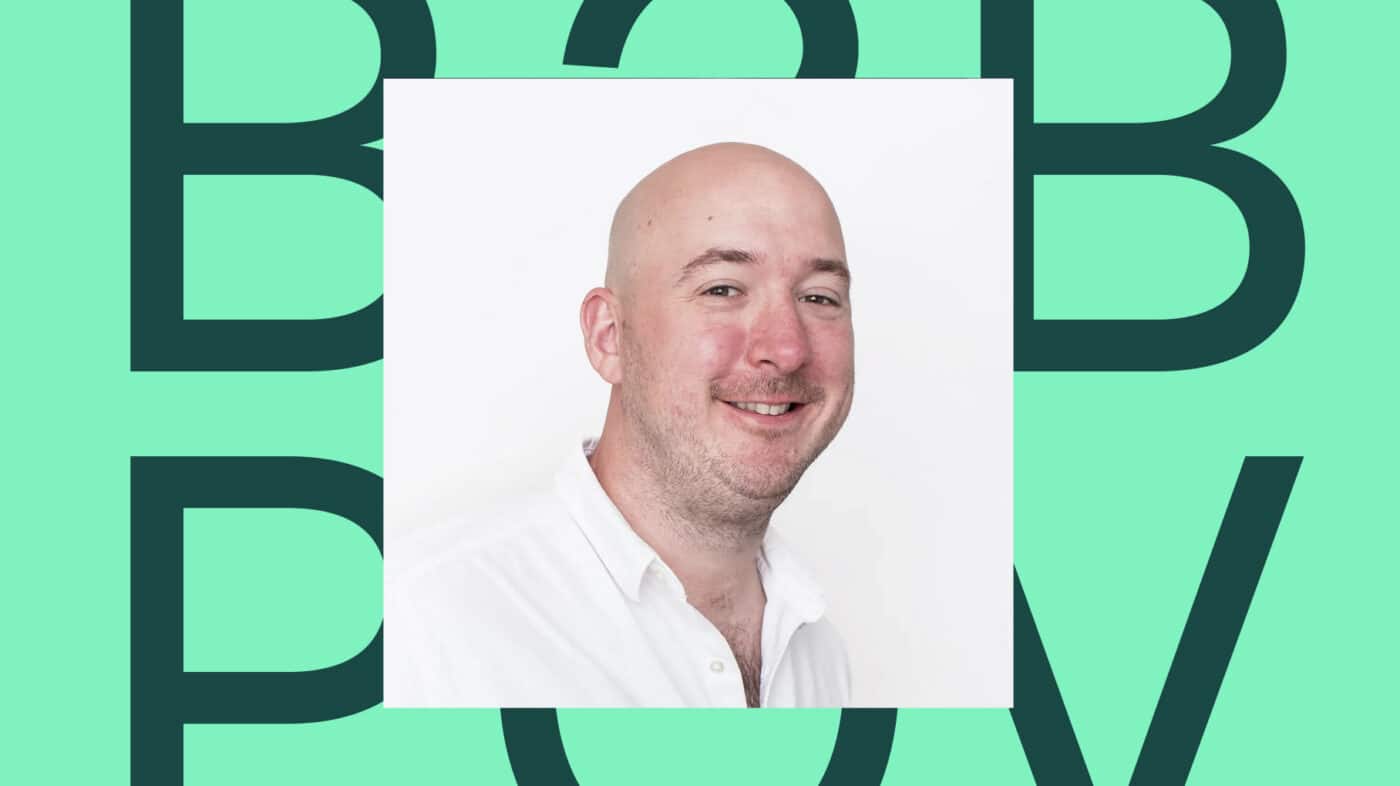
Luke Budka is an AI pro who combines a nose for a good story (from his background as a comms man) with sharp foresight about The Next Interesting Thing in tech and marketing. It’s led him to go deep on disciplines like organic search and, most recently, AI – as AI director at Definition.
You ask Luke one question and he drops a dozen insights. We talked about building AI environments, pricing models, the future of agencies (as well as society) post-AI, and more.
The Q&A below is a written-up version of a Zoom conversation, edited slightly for brevity and to cut my ums and ahs. Here are some highlights you can skip to:
- “I get really into stuff.”
- SEO as digital PR
- Risking your job to become an agency AI director
- Building private AI environments. Using the API: “It’s f—ing cheap!”
- Account manager bots and digital twins of clients
- The benefits of just giving people AI and letting them crack on
- Don’t believe the media; businesses are finding AI use cases
- You don’t know what you don’t know. You’ve got to use the bloody thing.
- AI is coming for spreadsheets too.
- Finally someone will read your brand guidelines: AI.
- Are writers the best prompt engineers?
- What does it mean to be human in an AI-era society?
“I get really into stuff.”
Adam Ketterer: I’ve known you since 2012, and you always struck me as someone who got ahead of new trends or opportunities – in digital marketing or PR – and actually learned how to do them well. You didn’t just blag it. You did your homework. Have you always been that way?
Luke Budka: It’s going to be really hard to not sound like I’m blowing my own trumpet in this conversation, but I think there are some fundamentals, like I get really into stuff. When I started down the PR route, I would read every copy of the British Journalism Review and every Press Gazette article. I read so much about journalism, about the trade bodies, the issues they were facing in the newsrooms, about patterns in employment in bigger newspapers.
SEO as digital PR
I got into PR because I quite like telling stories, basically. And I got into SEO for two reasons. The main reason was that I realised that changing what appeared in the search engine results pages was a way more effective way of changing what people thought about stuff. I thought, why am I trying to get two column inches in the newspaper when I can target a particular keyword related to a specific issue and know that X number of thousands of people will see that every month? If I can change what appears in Google, I can essentially change what people think about an issue. For me, it was a digital type of PR.
And what we quickly realised back then, in 2010-ish, was that the coverage we generated from our PR activities had a lot of untapped value. SEO agencies would call us, asking how much we’d charge per link we generated with quality editorial in reputable outlets. We were generating these results anyway but didn’t really realise their value. That drove the SEO bit for us [at TopLine Comms, later acquired by Definition, Luke’s current company].
From a business perspective, we realised that SEO could generate loads of inbound leads as well. For the last eight years at TopLine, we didn’t really do any business development other than SEO. We joined a couple of aggregators and creative networks, but the whole thing was based on inbound leads. We were able to be selective about the clients we took on, qualifying a lot out.
The amount of times we switched strategies that started as PR but became SEO after a while was significant. This was good for business as well, as it allowed us to retain clients longer, especially when they asked about PR ROI. We could demonstrate how all this coverage had a direct impact on their keyword rankings and that they were generating significantly more organic traffic.
Risking your job to become an agency AI Director
AK: How did your AI focus – and your AI role – come about?
LB: That was also a business-driven decision. Last year, I spoke to our board about our buy-and-build strategy at Definition. I was very much looking at it and thinking, if we don’t buy a development agency that can help us digitise our services and essentially AI our services, we’re going to be pretty screwed in about 18 months to two years. We needed to mitigate the impact of that with a sensible acquisition. That’s not what happened, though. We didn’t go out and acquire an agency, but I was given a part-time role doing this last summer (went fulltime in November ‘23) and I went out and found a development agency, and we’ve been doing that ever since.
It was a bit of a gamble at the time because I thought, if this all goes t*ts up or is just a hype-cycle fad, I’m essentially doing myself out of a job. I’d given my old job up, and I was like, well, that will leave me in a situation where I won’t really have a role to go back to if it does blow up. But it hasn’t worked out like that. Things have been accelerating.
I think it’s probably just a desire to learn new things, basically. That’s what interests me. I really love studying, which is mad when I think about my school days. I learned at university that I actually enjoy studying and learning about stuff in a way that worked for me. I have developed an ability to absorb large amounts of information and pull strategy from it. I try to understand which way the wind is blowing based on that information. I’m still doing between three and five hours of reading each week — absorbing content and research papers.
AK: So with AI at the agency, you were the one who saw the future and kind of forced the issue with the board, and they turned around and said, Okay this is now your job! You start on Monday.
LB: Yeah.
AK: How did that start? What were your first 30 days like?
LB: Well that was the issue really: we had been using ChatGPT since day dot, like November 2022. And it wasn’t until January that I realised anything we put in was being used to train the foundation model. So my message to the board was, A, we need to mitigate the impact of AI, and, B, we need to lock it down across the organisation because we could be leaking loads of information – because nobody knows what’s going on. We were just chucking stuff in.
Thankfully, at that point, there was a very small group of us using it, so out of about 15 people, maybe five of us were actually actively using it. So it was pretty easy to do the audit trail. We locked it down. That was the first 30 days, locking it down.
Then it wasn’t until March OpenAI announced that any information that passed to their AI models via their API would remain confidential. They had customers going, this is unacceptable. We’re using your product. But you’re using our data to train your models. How do we know our private information isn’t going to be regurgitated?
I think I probably said this to you before. There were famous examples like Samsung finding their engineers debugging their code using ChatGPT. They freaked out, and changed all their contracts overnight, saying, if you get caught, you get sacked. They then built their own internal private AI. When OpenAI announced you could use their API confidentially, it gave everyone the opportunity to build their own private environments.
Building private AI environments. Using the API: “It’s f—ing cheap!”
In March, I was like, right, this is what we need to do. We’ll build a private environment and connect to the OpenAI brains via their API. Then we started realising things like it’s way cheaper using the API. You pay pennies. It’s f—ing cheap! There are massive benefits to using the API. If you Google OpenAI pricing, you’ll find their pricing page for the API. You’ll see that for the latest, most powerful model they’ve got, they charge by the token. So every 750 words you input gets charged, I think, half a cent, and every 750 words the machine outputs is charged at something like one and a half cents. Suddenly, not only do we have a way of keeping AI usage confidential, but we can also give it to 150 users and say, use it as much as you want, because we’re only going to pay for usage, not users. This contrasts with the traditional model, where you pay a $25 monthly subscription or whatever per person, which can become prohibitively expensive.
The way we’ve done it is a higher upfront cost but a lower operating cost – and it means you can do other cool things like integrating different models. I’ve got a fantastic example of why that’s so important, from this morning. We’re working on a project for a large retirement trust, writing various prompts to output different types of content. This pension trust has a gargantuan style guide with specific capitalisation rules, punctuation guidelines, and date formats.
We’ll use Claude, the Anthropic large language model, for the writing bit, but for the style guide, we’re using OpenAI models instead, because it handles turn-based instructions better than Claude’s models. We had to keep everything secure and confidential, pay for usage not users, AND mix best-in-breed models because different models are better at different things.
So, going back to your question, I realised we needed to lock it down and build something, so I went to the board again. I got some quotes for the first version of Definition AI. I think the lows were around the £10k mark and the highs were like £90k. Bit of an AI Wild West from a dev point of view. You have to be really careful, because I think some companies will see AI attached to a project and say, alright we’ll put a zero on the end of that quote. Anyway we built it and launched the environment in September last year, and we’ve been iterating on it ever since.
Originally, it didn’t have multiple models and things like that. The really exciting stuff we can discuss now or later is what we’ve been working on recently. My colleague said I was full of s—t but the other day I was saying I’d take money to develop Definition AI, over a payrise! I’m really into building something that supercharges everyone I work with and hopefully makes us a more ‘valuable’ organisation. This whole endeavour has really scratched an itch.
I’m a kid who did a language and literature degree but grew up doing BBC BASIC coding in a notebook. I used to like writing line-by-line code. I have this weird right-left brain mix and I love to feed both sides. This new role gives me the opportunity to learn and develop stuff – with a development team obviously – and develop new revenue streams for Definition. It’s been a good first year, low six figure territory.
The stuff we’re currently doing has moved beyond language models. OpenAI’s Assistants API allows you to use a couple of tools they’ve developed, one called Code Interpreter and the other called File Search. File Search allows you to augment the AI models with your own data and files.
Account manager bots and digital twins of clients
We can attach up to 10,000 files per Assistant and we can customise them with instructions about what it’s there to do. You choose a model – GPT-4 Turbo or Omni or whatever – and, select the tools you want the Assistant to use, and then augment its training data with your own files. We’re now creating digital twins of clients, where we can say, you are a helpful assistant and your job is to act as the digital version of this client. Here are all the files we have on the client. They’re confidential but that’s fine because nothing goes beyond our private environment.
And what we’re doing now is including that Assistant in the team when we pitch clients. This is your fourth team member – they know everything ever written by human beings AND they’re augmented with your proprietary data.
AK: Yeah I saw a company that said they’ve given their AI agents official employee records. A PR stunt, but then of course people turned around and asked if the AI agents get a 401(k) and the CEO’s like ummmm.
LB: Yeah Sam Altman’s brother’s company did that. It feels like it’s where we’re headed, and it becomes an ethical issue – but that’s a much bigger conversation than we probably have time for today.
AK: So when you’re speaking with clients or prospects, what’s the AI pitch? What’s your thesis on it all?
LB: There are a couple. Initially we realised that our clients had exactly the same problem we had: they’re scared of leaking their IP. So our pitch was: Look, we’ve actually built this for us, and we can build it for you too.
And the easiest value they can get to grips with, aside from the confidentiality, is the pricing. Some of these organisations are spending, what, £20 a month per user on Microsoft Copilot and adding a thousand users. It’s insane. It’s not even using the latest OpenAImodel! It also has character limits on prompts and stuff. So it’s an older model, and it’s restricted! It gives us a way in when we tell companies we can give them access to multiple models, they pay for usage and we fill their private environment with prompts bespoke to them and models and Assistants fine-tuned on their data.
The benefits of just giving people AI and letting them crack on
Other sales conversations have to revolve around a specific use case because that’s the elephant in the room – or the supposed elephant in the room, the one that the media wants you to believe. Which is the whole, what is the use case? You can’t just get it and hope. When the reality is that there is plenty of research showing that just having AI can give you massive performance increases. The Boston Consulting Group survey gave consultants access to GPT-4 with no training, and just said crack on, guys. They measured improvements in task completion speed and quality. They found massive improvements in speed of task completion, and an overall improvement of 40% in the quality of task completion. So there definitely is an argument for just equipping everybody with AI.
That got a lot of attention, and many surveys with proper control groups and all that, show the same results: improvements in all employees’ performance, but interestingly the biggest improvements are in the lower-performing employees. Unsurprisingly, maybe. But that stuff doesn’t get as much traction, because there’s this media narrative about AI being a solution looking for a problem.
Don’t believe the media; businesses are finding AI use cases
The media loves a familiar narrative arc: the idea that AI is a classic tech hype cycle and that it is all going to fall apart. They think businesses are struggling to find use cases. But I could present you with lots of examples of businesses that aren’t struggling – they’re very much finding use cases.
I’m having two conversations tomorrow about that File Search tool I mentioned, and both of them are with companies that have created huge amounts of content that they need to interrogate. One’s a company that’s created a global tax guide, and we can help them to take this huge guide and ask any question of it, in any way. And not just that – we can make the AI answer the question in the language it’s posed in. And they’re like, “This is amazing. Do you know how much time we spend on this?”
So that’s one. The other one is essentially the same, but it’s a cladding manufacturer that’s created a guide, hundreds of pages long, with horribly complex information in it – their architects all ask similar questions when on site, in multiple languages. These are the use cases! And they’re saving huge amounts of money in content creation, querying, translation, and so on.
You don’t know what you don’t know. You’ve got to use the bloody thing.
The problem is, people don’t know what they don’t know. So the challenge is understanding what’s possible with these models. Ethan Mollick, the Associate Professor at the Wharton School of the University of Pennsylvania, reckons you need 12 hours with a state-of-the-art model to understand its capabilities. And I do agree. I don’t know if 12 is the magic number, but you’ve got to use the bloody thing to understand its potential. And once you understand the potential, then the use cases quickly become apparent.
AK: And that’s what you’re doing right now. You’ve done the work that means you can spot the use cases when talking to clients, right?
LB: Totally. I mean think of Microsoft – they flogged the hell out of Copilot because they got early access through that ten billion investment. By the way, do you know what a large part of that $10 billion was!? It was Azure compute. They didn’t just chuck cash at them. They were like, actually you can have credits for our cloud technology and we’ll have a profit share. Everybody thinks it’s cash but it’s resource.
It gave them early access, though. And If they crack encoding the spreadsheet with their new SpreadsheetLLM, can you imagine how many people are going to buy Copilot, if they make it exclusive to Copilot? Microsoft’s long-term plan is not just to use OpenAI. It will become a multi-model player. But if they can do this – and say you can only get, for example, the encoded spreadsheet piece from Copilot, then…
Having said that, it won’t be long until it’s cracked and open-sourced and then we’ll incorporate it into Definition AI. But it makes total sense for them to be working on this stuff right now.
AI is coming for spreadsheets too
AK: Yeah it feels like this past year has been everyone talking about the text- and image-based world getting disrupted by ChatGPT and others. Will writers and designers be out of a job? But they’re also coming for the spreadsheets, right? So not just creative industries and law firms under fire, but financial services companies too.
LB: Yeah it’s tricky, right? So Code Interpreter, that tool that OpenAI makes available via Assistants, uses some Python code in a sandbox to interrogate spreadsheets. Yesterday we were working on an Assistant here to help our quantitative team use Code Interpreter to analyse spreadsheets for mentions of a brand name. And because it’s powered by an LLM it’s got intelligence built into it, so you can say, here’s a brand name that I want you to find mentions of in these columns, but also look for spelling variations.
So a spreadsheet-analysing tool does already exist in Code Interpreter. Copilot uses it too, same tool. But financial institutions have a different problem, in a way. Like 80% of business data is unstructured and LLMs don’t do unstructured data well. It’s just not what they’re good at. But in January Google developed a genAI model that takes unstructured data and structures it. And JP Morgan did the same thing in December last year with DocLLM. You can expect this more and more. The banks will continue to build models.
I imagine there’s a lot of stuff going on in banks that we’re not aware of. Building models is expensive. Fine-tuning models, fine. Prompt engineering, fine. Building models from scratch, pre-training is very expensive – but banks have deep pockets. And the competitive advantage to getting this right is astronomical.
AK: So then the vertical industry barriers become stronger than the tech ones.
LB: Think of the training data too. Banks are how old – you’ve got maybe 300 years’ worth of records to train the models on? The big problem these companies have now is training data. They’re having to pay for it. And with banks the problem is monetising that training data, right? Just getting to it, because they’ve got so much legacy tech. I used to write about this stuff in my PR days, like what happens when everybody who knows how the legacy tech works…leaves the bank?! That’s a genuine problem. How do you mine that historical data? Is there even any point? Having said that, I saw something the other day that said AI can now solve that problem because it can write in all the legacy coding languages and basically resurrect the legacy systems – even if the people who ran them left or retired or died.
Finally, someone will read your brand guidelines: AI
AK: It kind of dwarfs the stuff we tend to think about day to day, like creating brand bots or client assistants. But I loved something I read from the Definition blog about how someone is (finally) going to actually read the brand guidelines we so painstakingly create for clients. But it’s not the client, of course. It’s AI. So this thing of designing brand materials to be consumable by AI. Your brand guidelines should be a series of prompts, essentially.
LB: Yeah it reminds me of Andrej Kaparthy, one of the founders of OpenAI who left, became AI director at Tesla, went back to OpenAI, has left again, and is doing his own education AI thing. Look at this tweet he’s still got pinned on his Twitter/X profile – from January last year. “The hottest new programming language is English.”
And it’s so true! The differences you can make to the output of the machine by tweaking words and phrases in a line of a prompt, are huge. I mean this is changing all the time. Anthropic and OpenAI have released prompt engineering tools that you can give your objective to and they will give you multiple prompts to test. People say: “Oh prompt engineering is dead!” And it’s like, well not really – I’ve got a calculator but I still need to know how to do maths, don’t I? You can write up 15 prompts but you’ve got to have 15 hypotheses to test and you still need to know how to delimit them and use the latest prompt engineering techniques to really be confident they’re working as well as can be expected. Likewise you need to be able to fix them when they break!
Are writers the best prompt engineers?
I genuinely think the people who are most qualified to do this stuff are linguists, writers. I take writers, people from the language team, and I teach them basic prompt engineering techniques like role prompting and instructional prompting and using examples of prompts AKA few-shot prompting. And I show them stuff like markdown syntax, like a very basic stylization language for AI, where you might use a hashtag to indicate a header 1, and two hashtags to indicate a header 2. Double asterisk for bold. Stuff like that. By giving them these basic techniques, suddenly they can address all kinds of use cases our clients want to explore. It also kind of allays the fears that we’re all going to be made redundant as well as they’re taking the power back!
AK: I saw a thing Peter Thiel said about how AI is going to be much worse news for “the math people” than it is for “the word people” – as in, it’s going to screw accountants out of a job before it does writers.
LB: We all need to pivot. We’re all going through the same thing. We’ve talked about it at Definition. You know, first they came for the language team – because they were large language models. Then it was DALL-E, DALL-E 2, 3, Midjourney – so then they came for the creative team, the designers! Then it was Sora, Kling, Luma, Runway – then they came for the video team! And it’s like, f—, what’s left? The parallels are the same. You get over the initial fear, you learn to use them, you become the experts in them, like you would with anything you sell to clients. But the difference this time – and we haven’t got onto my dystopian vision of the future. Maybe we should save that for another day. But we do have to be commercially a bit clever, because you now need to think about your price points. Do we have a human-only service, an AI-only service, a blended service in the middle? Clients are sensitive to this kind of stuff and rightly so. Experience tells us a blend is best.
But when people say a rising tide lifts all ships, it’s true because clients are coming to us and saying, can you do this work for us in your private environment? They know we have a secure private AI and they’ve often been prohibited from using AI at work. It makes us stickier. Whether it’s simple stuff like translation, or rewriting huge amounts of documents, it’s another string in our bow. You become the expert orchestrator at using these things. And you become valuable to clients.
What does it mean to be human in an AI-era society?
I have a lot of views on what the agency world is going to look like. I have a lot of views on what society is going to look like. But I’d need another day to go into that!
AK: Okay now I have to ask you though! Come on, what’s your p(doom)?
LB: What’s that?
AK: Oh isn’t it like an AI engineer in-joke –or, worryingly, less of a joke and more of a serious research question – about estimating the probability (p) of the worst possible AI outcome (doom)? What’s the existential threat level?
LB: Oh right, haha. I don’t think about it in terms of threats, like something’s going to become sentient and press launch on the nukes or something. I’m not saying it’s not possible. I think it’s improbable. I tend to think more of, like, how is society going to adjust? Human beings need purpose. People die when they retire, literally, because they lack purpose. What gets them out of bed in the morning?
The thing that – doesn’t concern me – but weighs heavily on my mind is how capable are we going to be, as a society, of restructuring what it means to exist? What is a human being’s purpose? What are my children going to do when they grow up? Is it going to be a case of government-mandated jobs because actually there are certain things we’ll need people to do. Will there be a universal basic income? And how will that impact quality of life? Or what will we do with a massively ageing population when AI cures cancer and Parkinson’s and things? The University of Cambridge are already publishing papers on their use of AI to identify proteins to attack with drugs that halt or slow down Parkinson’s. I genuinely think that in our children’s lifetime, AI will cure cancer.
But then the thought process moves on to, how scared do you think Big Pharma is of AI? Because what if someone in their bedroom can work out how to cure an incurable disease? That’s a question that nobody’s really asking but I think about quite a lot. Whether you’re a conspiracy theorist or not, it doesn’t really matter. The reality is, you can get a model that’s capable of large-scale analysis that’s available to everybody. The biggest fear that Google and OpenAI and Microsoft have – I saw this in some documents in a DOJ case in the States – is that the open source community can do in a week what it takes Google six months to do. Because you’ve got 3000 people around the world sitting in their bedrooms working it out. I think the discovery curve is going to be exponential for the rest of our lives because of this new level of democratised intelligence.
That’s my version of p(doom). I don’t think we’re all going to get made extinct, or AI’s going to decide we’re a blight on the earth – even though we undoubtedly are. I think the biggest threat will come from a breakdown of society or a restructuring of society giving us a rocky few years or a couple of decades maybe.
—
Luke and the team at Definition have launched a cool ‘Try before you AI’ programme that you can check out here.
—
Want to be the first to hear when the next in our B2B POV series is available? Fill in the form below and we’ll send it straight to your inbox.