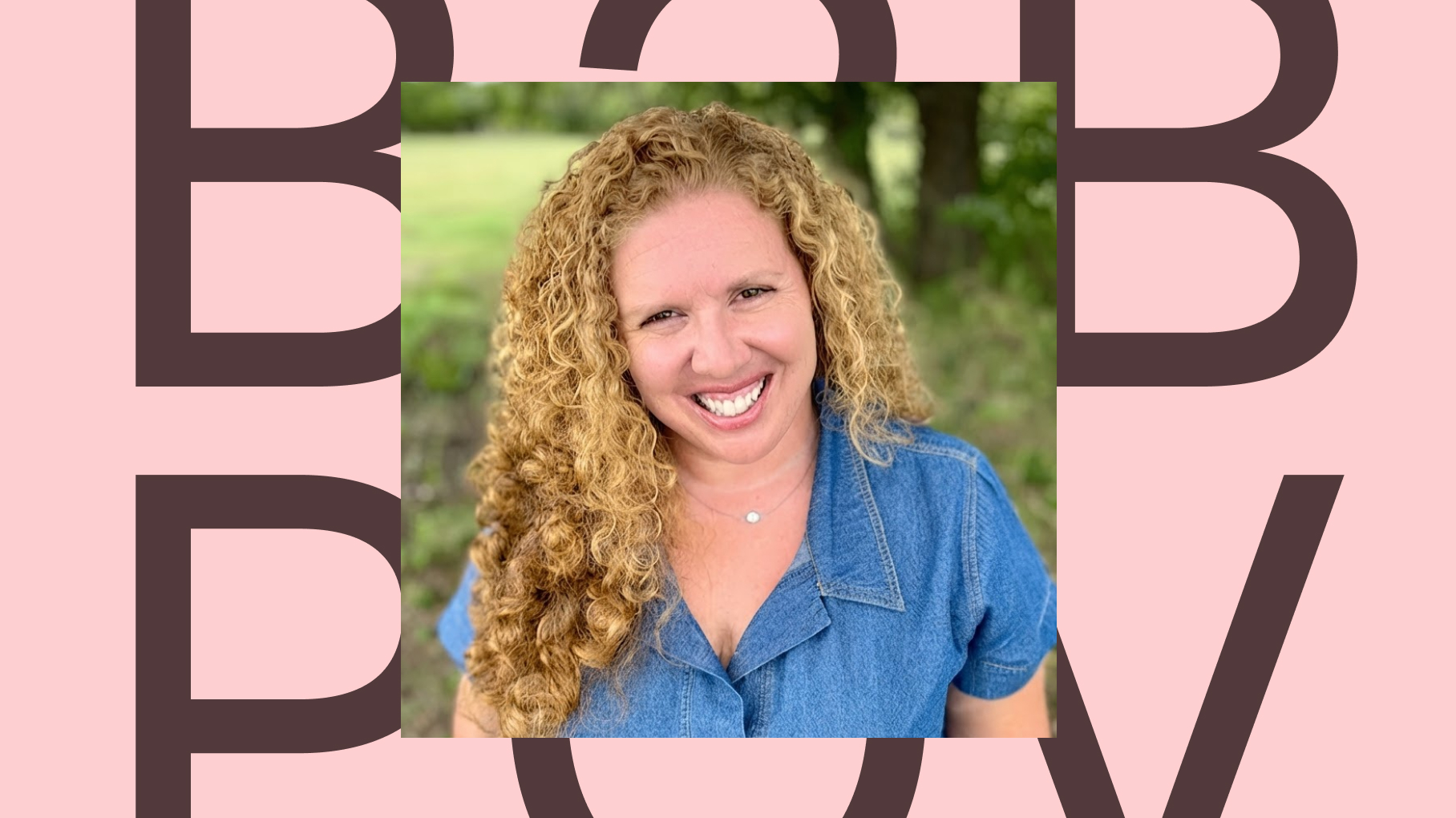
Tammy Ammon on why everybody blames the story, AI as a terrible first-draft partner, and being the “So what?” girl
Words: Adam Ketterer – Founder
Date: 5th October 2026

Tammy Ammon has spent her career moving through nearly every seat at the storytelling table – product manager, product marketer, content and thought-leadership lead – while keeping up a parallel life as a personal writer, most recently through her newsletter, Ink & Acres.
We talked about why “the story” has become B2B marketing’s favourite scapegoat, why product marketing might be the hardest storytelling job in the building, why AI makes a lousy first-draft partner, and why writing personally has never stopped being non-negotiable for her.
The Q&A below is a written-up version of a Zoom conversation, edited slightly for brevity and to cut my ums and ahs. Here are some highlights you can skip to:
- “Everybody blames the story”
- Brand story vs. product story: simpler and harder at the same time
- Finding an executive’s voice
- Thought leadership at the ‘chapter’ and ‘book’ scale
- Product marketing’s stakeholder problem
- “No, f*ckhead, you are not a storyteller”
- The specificity problem
- Being the “So what?” girl
- AI is a lousy first-draft partner
- A non-negotiable part of life
- Tammy-isms, and what AI erases
- Bad storytelling vs. no storytelling at all
- “This is not my personal novel”
- Business has hijacked the language of storytelling
- Sticking with the story
“Everybody blames the story”
Adam Ketterer: You shared a few thoughts before our chat and a couple of things really stood out to me. First, the idea that yes we can call lots of things ‘storytelling’ but there are important differences across formats and contexts. And second – maybe related – is this idea that the story or the storytelling is something that’s very easy to blame when things aren’t going to plan inside companies.
Tammy Ammon: If I can riff on that – I don’t think it’s worth going to the mat over some rigid definition, like insisting a story has to be five paragraphs with a this and a that. A TikTok video is a story, and so is a novel. Different audiences, different skills, different mediums, but story is universal.
What I have found, though, is that blaming “the story” becomes a shortcut when people don’t know what’s actually wrong. It gives people an out to avoid articulating the real problem. When someone says “the story just isn’t working,” what they usually mean is: your audience doesn’t get it. They don’t understand what you’re talking about, or why it matters to them, or why they should care. We turn that into this mythical, magical idea of storytelling, when really it comes down to the basics – who, what, when, where, why. We lose that because we try to build some fancy framework, wrap the story in fairy dust, and then it becomes very hard to unpack.
Brand story vs. product story: simpler and harder at the same time
AK: Does that play out the same way whether you’re talking about a brand story, a product story, a sales pitch, or a piece of content? You’ve worked across the whole gamut. How has it differed in your experience?
TA: Let me juxtapose brand and product for a second. At the brand level you generally have a much broader audience – you’re serving a whole industry, or a whole category of buyer, like “we serve marketers” or “we serve finance folks.” At that level, what you’re trying to do is simpler and harder at the same time. Simpler, because you’re mostly trying to say: here’s who I am, here’s what I’m about, I want you to trust me, I want you to choose me. You don’t have to get into the heavy detail you would in product marketing. But it’s harder because it’s far less targeted – though brand is also where you get to have more fun, with the feelings, the taglines, the positioning.
In product marketing, the theory is that the brand groundwork has already been laid – you have some awareness, some belief already established. My job on the brand side used to be making sure that by the time someone was interested in the product, I wasn’t having to educate them on who we were and what we cared about. You hope you’re not on a first date. So then product storytelling becomes much more about the nuts and bolts, and frankly, in B2B, that’s often not that sexy.
I think that’s where product marketing struggles – we want the marketing bit, the “use case,” which is really just another way of people asking, “tell me what this means to me”. Back when I was a product manager, we wrote requirements that followed the framework of “As a ___, I want ___, so that ___” – what’s the outcome I’m trying to achieve. In product marketing we sometimes borrow brand marketing’s tools but forget that, at the core, people just want to know: how are you going to solve my problem, what does it do, what’s the benefit to me? Brand should already have you covered on who you are. Product marketing has to unpack the rest – and it’s often complicated in the B2B space.
Finding an executive’s voice
AK: It seems to me that the brand side of things is obviously very important and touches the whole org but is often quite a closed room of decision-makers. On the product marketing side, you’ve got the leaders, the product builders, the marketers, the customer teams, and probably more stakeholders than any other kind of storytelling. Everyone’s trying to add two more industries and five more use cases.
TA: That’s true.
AK: So it can get messy and hard to please everyone. And then on the content and thought leadership side – where you’ve also worked – there can be plenty of people involved but maybe it’s a bit more containable?
Thought leadership at the ‘chapter’ and ‘book’ scale
TA: The nice thing about a thought leadership piece is that you’re generally after something much more precise. Either something’s happened in the market and you want a point of view on something specific – a regulation that’s passed, a belief you hold, a trend you want to demystify. Demystifying is a huge part of what thought leadership does.
The challenge in thought leadership is that the individual chapters are fun to write. The harder question is the overall story an executive wants to tell, so that all the chapters feel like they belong in the same book.
That tends to come down to who they are – are they the educator, who takes complicated things and demystifies them? Or are they the one who never talks in metaphors, who always talks in hard customer examples, who’s the voice-of-the-customer person? Figuring out who they are and how they show up is what’s fun about doing thought leadership for executives – people start to associate not just the topics but the person with a particular way of thinking.
Product marketing’s stakeholder problem
TA: What you said about product marketing having the most stakeholders is so true – I was kind of nodding and cringing at the same time. And that’s where a lot of this “everybody blames the story” stuff comes from. Because you have so many stakeholders, and because tools have democratized writing – anybody can pull up a Google Doc, anybody can publish, so everybody fancies themselves a storyteller. For years, graphic designers were almost immune from that – non-professionals wouldn’t casually claim to be a graphic artist in the same way they might say they’re a writer. Now, with AI, everyone thinks they can do it all. And in some ways and at some level, they can, but is the quality and the judgement there?
I was looking for a song for an Instagram post recently, found one I liked, looked up the artist, and it turned out to be AI-generated – not a real artist at all, just a compilation of AI music. No thank you. Everybody has the language of storytelling now, but a lot of people don’t have the years of experience of actually unpacking different kinds of stories.
“No, f*ckhead, you are not a storyteller”
AK: This reminds me of the clip I shared with you before we spoke. It’s from like 2014, which was when the “storyteller” buzzword was all the rage on marketing CVs, just like it is again now. It’s a clip of Stefan Sagmeister, an Austrian graphic designer, talking about the same phenomenon and his take is: “No f*ckhead, you are not a storyteller.” His example is a roller coaster designer who describes himself as a storyteller, and Sagmeister is kind of bamboozled. He says no, you’re a roller coaster designer, and that’s great – it’s not an insult. Be proud of what you actually do.
What struck me was his point about who the real storytellers are – novelists, filmmakers – and how they don’t call themselves storytellers. I think it’s because they’re not insecure about their craft. Their craft is a specific medium, a specific format. They’re technicians. I go to work and I make a film – and if it’s a good story, great. If it’s a work of art, great.
There’s something about our current moment where marketers and creatives especially are insecure about committing to a specific format or medium, partly driven by the job market, and partly by AI – this fear that if nobody wants your e-books any more, or your decks, you’d better become a generalist storytelling chameleon. And they get vague and lofty about it. Whereas the better advice might be the opposite: be a specialist. Tell the world you do product narratives or whatever it is, and you’re really good at them.
TA: It’s funny, because I’ve always considered myself a writer – that’s what I studied, that’s the medium I prefer. But even I got caught up in the “storyteller” branding of it all, on LinkedIn especially. I’ve kind of gone back to just saying: yeah, I’m a writer. Whether I’m working on a video script, a thought leadership piece, or a deck explaining a new product feature, I’m doing the act of writing in all of it. But you’re right that there’s a kind of FOMO about mediums now.
The specificity problem
Going back to product marketing – I think the other challenge in B2B is that so many of us are marketing to companies who are themselves marketing to consumers. We tell them: personalize, make things relevant. And then our own marketing is one pitch deck, one one-sheet, one video. We haven’t had the capacity to make five or ten versions of something – though that may be one of the genuine upsides of AI. In B2B you’re usually talking to a whole buying pack, not one person: the champion, the CFO, legal, the technical team doing implementation. You’ve got to tell a story to all of them.
Think about how few novels have true mass appeal – there are genres and subgenres and sub-sub-genres, and very few James Pattersons who can hit it out of the park for everyone. That’s the challenge with product marketing: you’re almost chasing one of those knock-it-out-of-the-park moments, which are genuinely rare. Truthfully, in B2B product marketing we’re probably in the sub-genre or sub-sub-genre space where we really need to get very specific.
So when I hear “it’s just not good storytelling,” I think it’s usually one of two things: you completely missed your audience, which is fair, that’s not great storytelling – or you weren’t specific enough for it to matter. That’s a lot of what’s wrong with AI-generated marketing copy, too – it puts fluffy words around things until it loses all specificity. And especially with a new product launch, you don’t always know how people will react yet, and marketing doesn’t always have the access to customers it needs in order to find out, so you launch, you learn, you adapt.
AK: That tracks with what I see on the personalization side too – there’s a lot of bad personalization that’s personalized but not relevant, or personalized for no reason, to the point it backfires. If you have a genuinely good, relevant story, you shouldn’t need shallow personalization layered on top.
And to play devil’s advocate on the word itself – maybe it’s really not storytelling, f*uckhead. Maybe some of what gets called storytelling is really just persuasion. That’s part of why this series is called B2B POV: what does someone actually believe, what’s their point of view on the way they work, what does a company believe that others don’t, and how does that shape what they build and sell? If that point of view sits underneath the brand story and the product story and everything else, it becomes the backbone – not necessarily the same story structure every time, but a consistent worldview that’s persuasive and relevant to the right people. That’s often what’s missing.
TA: Yeah, and that’s the other thing – we pick up something like personas and then lose our minds and end up with twenty of them, and suddenly everything is needlessly complicated. A little self-inflicted story madness.
Being the “So what?” girl
For product marketing, and honestly for marketing and storytelling generally, it comes down to: who are you talking to, and why should they care? I spent a good chunk of my career as a product manager, building products. That meant writing lots of user stories.
I had a reputation as the “so what” girl. People would come to me thrilled about a new feature, tell me all about it, and I’d say, “So what?” They’d be confused, and I’d say: why should I care? Why should our customers care? That’s probably the single best question in product marketing – have you made somebody care? What problem does this actually solve for them?
In this age where everybody’s a storyteller, so nobody’s a storyteller, I think we’ve also become scared of the basics because they don’t feel sophisticated enough – like there has to be a dramatic story arc or nothing counts. If product marketing could consistently and compellingly answer the “so what?,” that would already be a huge win.
I still love “As a ___, I want to___, so that___” – but there’s a question that comes right after it, and it’s where a lot of storytelling gets derailed: okay, I buy that you’ll give me that outcome – how? That’s a part of the story that’s still really tough.
AI is a lousy first-draft partner
AK: All this talk of AI makes me think about AI-generated – or let’s generously call it “AI-assisted” – storytelling showing up everywhere now, especially on LinkedIn.
TA: I can’t with LinkedIn.
AK: You can tell immediately – and it’s not just the em dashes or the stock phrases.
TA: It drives me crazy, because there’s nothing wrong with a good em dash! I use them all the time – people, settle down.
AK: Oh I’m with you, totally. But it’s that thing of reading something with a real veneer of fluency and polish, and realizing pretty quickly that it isn’t saying anything – it doesn’t answer the “so what.” It’s vapid. So maybe being the ‘So what?’ girl is more important than ever.
TA: I think there’s some goodness in AI – I use it every day – but the thing I feel really strongly about is that it’s not a great first-draft partner. The first draft is where you wrestle with the ideas. It’s where your experience, your point of view, your knowledge of the business, all get forced onto the page. If you start with AI for that first draft, you very quickly slip into editor mode instead of creator mode – you lock yourself in.
I had a brilliant manager early in my career. I was giving feedback to a graphic designer on a website, and I was being very specific – you know, I want a dog doing these particular things. My manager said: Tammy, if you tell them you want a dog, you’re going to get a dog. But if you tell them what you want someone to feel, how you want them to respond, they might come back with something better than you ever imagined – you have to take the guardrails off and tell them what you’re trying to achieve. I think about AI the same way. If I use it for the first draft, I’m just going to get the dog I asked for. Sure, it can be a good partner later in the process. But there’s something beautiful about the wrestling that happens in the first draft of any long-form piece.
AK: I’m with you on that. People who genuinely enjoy writing know that the writing is the thing – you write to figure out what you think, not to write down what you already think, because you don’t actually know what you think until you’ve finished writing it. Outsourcing the first draft is outsourcing that whole process.
A non-negotiable part of life
AK: Can we talk about the writing you do outside of work? I know you write on Substack, you’ve had a blog in the past – what has storytelling meant to you personally?
TA: It’s funny – I didn’t go into university knowing what I wanted to do. My first semester I was actually a theater major, which is hilarious if you know me now. But that’s where I first started getting into writing, and I had an influential professor who told me, “you’ll be okay, because you can write.” I was thinking about switching schools, and he said wherever I went, I’d be fine, because I could write and figure things out.
That was the first time someone told me I had a real talent or passion for something, and I followed it – moved schools, did journalism for a while, then switched to creative writing. In both disciplines I always had people around me encouraging me, telling me there was something there. But then life happens – you get married, you need to make a living – so I would have loved to try to be a budding novelist in my twenties, but I also wanted a house.
That identity of being a writer is something I’ve held dear to me since those university days, and the older I get, the more it’s become a non-negotiable part of my life. It genuinely brings me joy – it’s my way of observing the world, especially a world that feels increasingly chaotic and noisy. I love sitting down and taking a small observation and unpacking it, finding the nuance in it. I’ve done a little fiction, which is fun, but I tend more toward essay-style writing. I’m definitely not an outliner – I’ll sit down with a high-level idea, but the joy is in watching it unfold, and a lot of the time I end up somewhere I never intended.
Right now, I’m mostly trying to get really good at collecting ideas and details that I might come back to later. My husband Jake and I did a huge road trip – fifty-something hours in the car, which would be torture for some people, but it was a great observation window. We’d pass a farm in the middle of America, see a farmer in a truck, this whole scene would unfold in front of us, and I’d try to capture as many details as I could so I could come back to what it looked and felt like later. Right now, storytelling is really necessary for me – it keeps me grounded, it brings me joy, it helps me understand the chaos around me, and it also helps me block it out, because it sharpens what’s actually important.
AK: I love that idea of being a writer as a job you’re never off duty from – you don’t clock off, because the work is noticing things and thinking about things. That’s one of the privileges of working in marketing or the creative industries – you’re always in that training mode. Everything is material.
Tammy-isms, and what AI erases
TA: It is! I don’t know if you do this, but I’m constantly imagining people’s backstories – you’re driving down the road, you see someone dressed a certain way with a certain expression, and you wonder where they live, how they got there. Writing and storytelling require this constant curiosity, and that’s what I like about it – you’re always learning something new.
AI is interesting, and I definitely use it at work – templatizing things, doing research – but I do wonder if we get to a place where everything is AI-generated, whether what makes a story beautiful is so often the time and energy and effort it took you to get there. Does everything start to feel a bit flat? Like it’s been to the tanning salon and had veneers put on its teeth?
AK: And it’s not just in creative writing. There’s also that thing of enjoying other people’s everyday writing in an email or a Slack message – you get to know someone through it, especially remotely. You see their fingerprint in how they write. And that’s getting erased for some people, because they’re using AI for emails and reports now. I think that’s just rude and annoying, honestly.
TA: I do too. We all have our idiosyncrasies – it’s what makes us special. My team where I work now jokes about “Tammy-isms,” because I have all these wacky little Southern Texas phrases – it’s just how I speak, how I see the world, and they’re a bit funny sometimes. AI would strip all of that out.
AK: So it’s not just the work and the marketing that suffers – it’s the people doing it. We’re all learning how to be people in the world, how to communicate, and your voice and your quirks develop through that. The way people write and chat and talk is basically everything in terms of how you get to know them. That whole middle ground is getting flattened and erased – you don’t really get to know these people. The ones who still enjoy the work, who won’t outsource it, are the ones who stay knowable, in the work and in themselves. One weird consequence to using AI to write is that the people behind the writing are getting erased.
TA: It is interesting – it’s also kind of like, where did all the introverts go? You’re still going to have the big characters who are on stage, but there are a lot of people behind the scenes making the work who are just as interesting, if not more – they just do it in a different way.
Bad storytelling vs. no storytelling at all
If I think about all the different kinds of storytelling I’ve done – building a product, product marketing, working with an executive on thought leadership – that question of “So what?” is maybe the simplest but most important one we can keep asking ourselves.
When somebody says “there’s no storytelling here” or “the storytelling isn’t good,” it’s really easy to run off with that comment and assume you know what they mean. But I think it’s as varied as the kinds of stories we can tell. Instead of taking it as an absolute verdict, I think the job is to take that feedback as a flag that something isn’t working, and then do the hard work of unpacking what exactly isn’t working: did I not convey the value? Is it not relevant? Is it too complicated?
AK: If you sense someone brought AI into the first draft, and there’s no point of view in it, no “so what” – to me that’s not bad storytelling, it’s just not storytelling. There’s a difference between the two, and that’s been a bit of a eureka moment for me from this conversation.
“This is not my personal novel”
TA: Exactly. And I think the other thing we have to do in corporate storytelling is take the moral judgment out of it. For those of us who come to this from a genuine love of the craft – I love a story, I love creating them, I have my own personal creative outlet – it’s really hard, because “storytelling” is such a loaded word. When someone says “the story isn’t good,” it feels like a personal assault. We’ve taken something that’s highly personal for creative people and pulled that word into the corporate world, where the underpinnings are similar but the output looks completely different – and then when it doesn’t land, we make people feel like they’ve failed.
If someone asks me if I’m upset about an edit or feedback on my work, my response is: this is not my personal novel. You’re trying to achieve a much more specific commercial goal than in a true creative endeavor, but we’ve attached all this creative language and process to it, which makes the feedback feel very personal. That can be unhealthy.
I try to remember to take that piece out and just capture a bit of the magic – which is really about bringing disparate pieces together in a way that makes sense – in service of something commercial. Ultimately we want people to believe something and buy something, but stories are magical, and B2B doesn’t always feel magical, so we’re trying to borrow some of that magic for our purposes.
AK: Has it helped you to grow a thicker skin over the years, and to separate those two worlds better? I know it still always hurts a little, cos I feel it myself, but you become desensitized over time – which might not always be a good thing for your writing, right?
TA: I think the difference in personal writing is that you get to choose who you listen to and who you don’t, whether it’s an editor you respect or a friend. If you’re doing your business writing and you’re getting feedback from all directions from people who may not have any storytelling skills, that’s the harder part. But yes i think it all gives you more discernment over whose voice matters and how to manage feedback.
I think the big thing is: we’ve hijacked the language of storytelling in the business world when what we really mean is that we want to make people believe and buy. We want to borrow the magic and the power of storytelling and inject some of that into our marketing.
Business has hijacked the language of storytelling
AK: Yeah and using that magic as a delivery mechanism for a commercial proposition ultimately, and bringing in data to help you – and I know your job title at one point included the words “storytelling” and “research”, and the job really is often a mash-up of those approaches. And if you can crack that it still feels like a fun and honourable endeavour.
TA: It is a fun and honorable endeavor! I wouldn’t want to do anything else. The older I get, the more I love it. It’s a craft as old as time that’s still genuinely hard to master, with so many different flavours.
AK: I think that’s part of what I like about commercial writing, and especially ghostwriting, is getting to put on someone else’s points of view and personality for a while. I’m not always the most opinionated or decisive person myself, so there’s something comforting about being a kind of ventriloquist, trying on different takes and worldviews.
TA: I love that – I’ve never thought about it as ventriloquism before, but it’s brilliant.
AK: Maybe that’s ungenerous to the executives or whoever it is we’re writing for – really it’s coaxing out their smart thoughts and points of view. But yes, trying them on yourself and seeing how they feel.
TA: It is. Stories are magical, and not everybody reads novels, or watches video, or listens to podcasts – but everybody consumes stories in some form, so it’s only natural that businesses want to borrow that magic. The question is how you do that without losing yourself, especially in product marketing, where you’re more limited – there’s only so much a product does, only so many problems it solves, only so many kinds of customers.
Sticking with the story
One other thing worth naming: once you find a genuinely great story and people buy into it, you run into a different problem – you get tired of it. It’s rare to have a book you’ll read over and over. You almost always get tired of the story inside the company before the market gets tired of hearing it, and that’s the other battle you fight as a storyteller: everybody inside thinks “everyone’s heard this already,” when the market was never sitting around waiting to hear it in the first place. That’s part of what keeps storytelling in constant tension – it’s never stagnant, and you never really arrive.
AK: It’s not just about stopping a client or colleague from chasing the next shiny thing – I have to check myself on that too. I’ll think, “ooh, this would be fun,” and then have to tell myself: no, stop it. Stick with the message.
TA: Especially with brand. It takes real discipline.