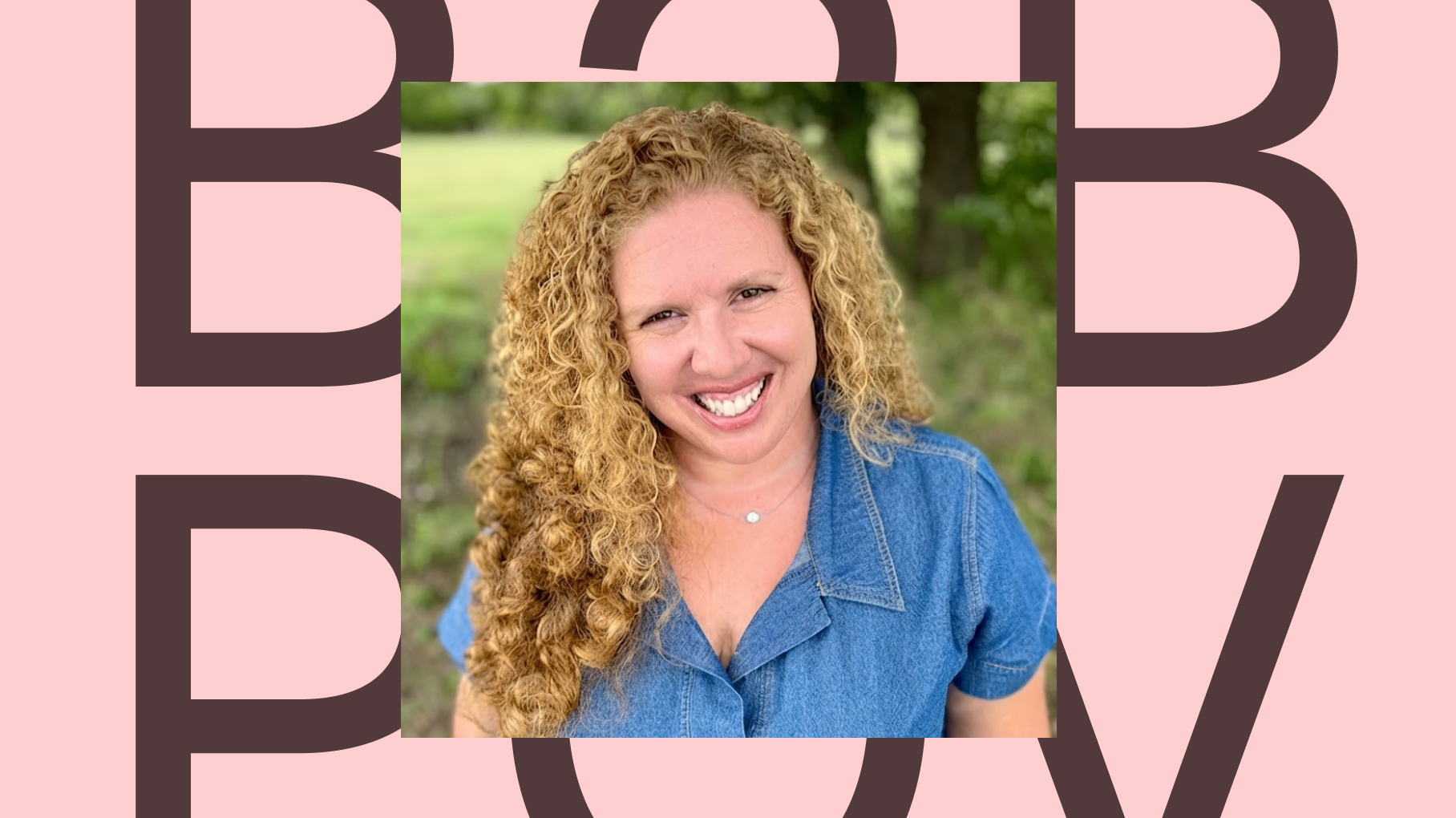
Construction tech, credibility and the boring power of brand consistency
Words: Adam Ketterer – Founder
Date: 4th October 2024

In this instalment of B2B POV, we’re speaking with Jane Dotsenko of Procore Technologies who was more than generous in sharing her stories, professional and personal – with lots of crossovers and unifying themes like authenticity, consistency, curiosity and problem-solving. We covered loads, from how to tackle diversity and mental health issues without overclaim, to the advantages of a deliberately generalist career path.
The Q&A below is a written-up version of a Zoom conversation, edited slightly for brevity. Here are some highlights you can navigate to:
- Product and content as one
- A new-ish imperative for tech companies
- Brands must justify their existence
- Building purpose on top of product
- The boring power of brand consistency
- Monumental barriers in construction tech
- Flexing your POV for different audiences
- The long road to credibility
- Justifying brand budget to the CFO
- Positioning Jane: Curiosity, storytelling, and solving specific problems
- In praise of marketing generalists
Product and content as one
Adam Ketterer: You’ve worked in product marketing and content marketing. How did the transition happen for you?
Jane Dotsenko: It’s difficult for me to nail down because for me product and content is all one. When you do product marketing you do a lot of storytelling – and a lot of positioning. You make choices about what you do and don’t talk about. So in essence, for me, it’s not a different role. It is traditional marketing. I have a background in demand gen and events, and into digital, and managing SDRs, and then into product marketing and content … It’s all just experiences of how people who buy your product or solution, how they actually experience you. Just different angles. Not just your proposition but also: what are you as a company? The storytelling needs to pull through everything.
A new-ish imperative for tech companies
JD: I’ve been in tech for a good 12 years now, in different aspects of marketing. Pre-pandemic, it started to emerge that you need to be more than a tech company. In the past, I’d say the tech industry – when things were exciting and emerging – it got away with just praising itself for being tech! The benefit was that you get tech and it solves everything. And as more adoption comes through across functions and industries – and construction, which I’m currently working in, was no exception – people realised the tech isn’t a silver bullet. The promise of the tech was much higher than what it could achieve, because there’s also the people element, the process element, the organisational culture element, and it all has to play along to achieve certain results. And it’s hard! And it’s long, and you have the maturity curve, so you start small and you expand.
So I feel like we’ve come to a place, maybe six years ago, where it wasn’t enough just to talk about your solution. Buyers became disillusioned because the feedback loop started to build up – just buying a licence doesn’t solve your problems. You have to do the other work. So it’s what I’ve observed across all those functions, working in sectors like martech and cybersecurity. Like, in cybersecurity, you could get the best solution but if your people click on malicious links in emails – it could be one person – and your perimeter is breached and your system is compromised. It always goes hand in hand with what your people do and the trust you create – accountability, responsibility.
Brands must justify their existence
JD: Which brings us back to brands realising that they need to do more than to just be the tech. How will you earn trust? What was there – 11,000 martech solutions – the last time Scott Brinker did his landscape? It’s so hard to stand out now among companies (and companies are just groups of people, right?) so you have to communicate why you’re here in this world. Why are you taking up space? And this is how I think brand building is different now from what it was 15 years ago. It’s more than the look and feel and the positioning and so on. It’s also: what are you doing in the world to make it better?
AK: I love that. It has to be a point of view, embodied by action. What are you actually doing to prove you mean what you say – and to justify “taking up space” like you put it! And it brings me to the work I saw Procore doing with Get Construction Talking.
JD: Exactly. This is the actual point of view and the fundraising we’re doing. It’s become popular for IT providers to be partners to the industries they serve. And Procore does that for construction. We have construction experts helping us build a better product. But we want to go beyond that. We support women in construction, because it’s still marginal representation. It’s like 10%, and we want to improve that – across the board, not just in leadership. To improve representation but also to bridge the labour gap and to build more successful businesses! Because we know that more diverse teams are more successful because they have a more holistic view of problems and solutions. So women in construction is a big focus.
We also support students – especially in the US but we’re looking to expand this in other countries. We give Procore to students at universities and trade schools so they get trained up on the solution and they know how to bring efficiency to projects even before they hit the job market.
And we have Get Construction Talking because we have this mental health issue in the industry. It’s something I’m passionate about and I’ve been quite open about – you know, I’ve shared on LinkedIn about my own depression. So actually, there’s a backdrop of depression and other challenges across the board in our society. Within that, there’s the elevated suicide risk for the male population. And then you look at construction, which is such a male-dominated industry that it creates a kind of ecosystem where this issue can accelerate and become an even bigger problem. So for me, it’s about tying what we do at Procore – trying to free people’s time, automating processes, reducing the paperwork – that’s what the software does. And maybe seven years ago we would have stopped at that.
Nowadays, we have to go further and say what impact does this have not just on the business goals but on the people working in these businesses. And that’s where Get Construction Talking comes in. We can say, hey if you don’t have to work seven days, or do late nights, or work a full shift and then come home and do the paperwork on your own time…then we’re making people’s lives better. And our tagline, which has been around for so long, is “improving the lives of everyone in construction.”
AK: It’s always nice when you can live up to the tagline!
JD: And getting back to walking the talk, if a general contractor buys a Procore licence, they can add an unlimited number of stakeholders they work with – whether it’s a property owner or a subcontractor working on woodwork or concrete – they can add them free of cost.
AK: That’s cool. Must be such a sprawling thing, a construction project.
JD: And even if the person on the ground isn’t on the Procore platform, maybe their supervisor is. Now, something like 30% of the work being done on a project is re-work – someone had the wrong timings, or wrong materials, and so on. So Procore reduces the need for rework significantly. Which is good for project efficiency but it’s also huge for worker morale. If you’ve done the metalwork or laid the concrete one day, and the next day you get a note saying actually you need to rip it all out and do it again – even by just reducing that we’re improving lives at the very forefront of construction.
AK: It reminds me of that stat that says something like a third of the world’s food is wasted. If you can fix the rework problem, that’s a huge impact.
JD: Right! Even just getting rework down from 30% to 25% would have a massive effect on labour costs and materials and of course people’s motivation and morale.
Building purpose on top of product
AK: The last few years have seen a bit of a backlash against purpose washing. How do you combat that cynicism?
JD: Our customers tend to use Procore for an extended period of time, so they become familiar with us and they see those efficiency gains. We’ve done research to see how our brand is viewed and we have a high NPS score among our community. So we have that baseline – we actually deliver on the promise of the solution. And it’s not just the tech. We have great customer service. You can talk to a human and present them with a complex issue to solve for you, which is rare in SaaS. And it’s that baseline that allows us to build up and talk about women in construction and mental health in construction – and still feel authentic.
We’re on the ground at events too. In the States we have a construction innovation event coming up in November called Groundbreak. It’s like five or six thousand customers and partners coming together, and they love spending time with each other. So I think that really authentic relationship we have with our customers and, through that, the industry – because they talk to each other. You know, we heard stories of expats who move to the Middle East and they say ‘Hey I used Procore in the States, can we get it here?’ The continued support of the community gives us a good standing to do more. It’s not like someone in the C suite said we’re gonna put our name on mental health, and nothing happens at the bottom. We engage with charities, we show up at trade shows, we show up in lots of ways and people believe we care because we deliver on the other aspects too.
The boring power of brand consistency
We’re also consistent. You know, Procore has been around for 20 years and the consistency we’ve had – how we walk the talk – that also takes time. We sometimes disregard the fact that it takes time to build that trust. Not just to appear authentic. We’ve done the long tail on that.
AK: Yeah people forget that your positioning efforts don’t guarantee that you’ll actually succeed in occupying the position you want in people’s heads.
JD: Exactly. And if you frame it in the whole ‘instant gratification’ Netflix and Amazon culture that we’ve all been affected by, we’ve been conditioned to expect things quickly. And trust doesn’t happen like that.
AK: And consistency isn’t one of those traits that people shout about, right?
JD: Boring! Boring!
AK: Right!? I mean in some industries boring is good and maybe construction is one of them. But that idea of a long founder legacy – a CEO showing up consistently for 20 years. It’s not going to come from a CMO who’s there for 18 months to three years or whatever.
JD: We’re not spared the shiny things and the new things in marketing of course, but Procore operates in a very humbling, down-to-earth industry. If you have a job site and there’s a mountain, you can’t move the mountain. Or there’s pouring rain so you can’t do the steelwork. It’s very humbling when you work in a brutal outdoor environment. And there are a lot of limitations, lots of problem-solving every day. Every day is a new challenge for people in construction – so we need to be there for them every day, and it disciplines us to be consistent. You can’t do otherwise and be trusted in construction.
Monumental barriers in construction tech
AK: I remember working with a construction tech VC out of Germany [Foundamental] and part of their thesis was about the huge barriers to entry in construction – it’s like an industry under a glass dome.
JD: Yeah huge barriers.
AK: You can’t just build a SaaS and then verticalise it for construction. You have to know what it’s like to be on the ground. And that’s a big part of the humbling experience.
JD: You know what? I’ve worked in retail and marketing technology – but in construction you have to build one thing and it has to be done within the budget and the timeline, and those restrictions are way greater than any other industry I’ve been in.
Flexing your POV for different audiences
AK: So thinking about audiences. Procore has many! From customers to partners, and different levels of seniority within each. SO a POV has to flex. How does that work when you’re thinking of different audiences or initiatives?
JD: You’re right, and people have different jobs to be done when they wake up in the morning. I think we try, at a brand level – and I’m not going to speak to product positioning as I’m not a PMM at Procore, but at the brand level – we think all-audience, omnichannel. What are the messages that are high-level and relatable enough – and there’s always a balancing act from a content perspective. You don’t want to be pie in the sky but you want to be broad enough to find those commonalities that will bring everyone together as one industry, regardless of if it’s an integration partner, a technology partner, a general contractor, a real estate owner, or whoever. We have a great case study with Starbucks who are obviously a massive brand but they own real estate too. They own it and develop it in many parts of the world so they operate like a commercial owner invested in those properties. But also they’re very hands-on in developing some of those properties. So it’s a very complex ecosystem, you’re right.
And you look at the extended players. There are the investors, the supply chain, the manufacturers of the materials – they’re not our key stakeholders but they impact our audiences in ways that affect us. So we think about being a trusted partner to the industry, and it’s a tall order! Because to be trusted by people with different jobs to be done, you have to help them in a way that’s relevant to them. And in terms of the messaging, we think that diversifying your workforce – the labour shortage is massive. There’s an ageing population that’s going to retire and take some of that hands-on knowledge that the trade – and it is a trade – rely on. So we say, how about you diversify your workforce, bring in new, younger, different talent that can help bridge that gap?
The long road to credibility
JD: And there’s a fine line, Adam. Especially with things like diversity and mental health. We have to position ourselves as a partner – but not try to solve it. It goes back to building credibility. If we pretend we know the solutions and we can solve it right now, we lose our credibility. But if we say we care about it, and we contribute resources to keep the conversation going and drive change – with mental health or diversity – then suddenly things start to move, you get traction, and other people start coming to you and joining in. And once again it’s consistency – we know that Get Construction Talking is going to be a multi-year campaign because these things take time. You know sometimes even the SaaS companies don’t have this long-term view – they want their quarterly view and results – but we know that this change will take, I don’t know, a generation! So we have to show up for topics like these. And we need to be strategic because unless you’re willing to commit the resources for five to ten years, just don’t do it. You’re gonna burn your name, burn perceptions.
AK: I love the picture of consistency and long-term, maybe compound gains that you might see from brand-building that takes years or decades. We’ve talked about Les Binet’s and Peter Field’s The Long and the Short Of It in this series already – and Stan Woods said something interesting about the need for company-level KPIs – so I wondered how the measurement conversation goes for Procore.
JD: How do you go to the CFO and justify that you’ve just spent that money and resources? Ha! Is that your question?
AK: Ha, yeah basically!
Justifying brand budget to the CFO
JD: You know, we’re all bound by certain metrics – especially publicly traded companies – and I think it depends on your leadership. In some companies they’re still thinking in some cases as advertising being the brand, right? So you have to know your internal audience. I feel there are a couple of angles. First of all, what we do at Procore with those seemingly “intangible” long-term initiatives is the engagement and the build-up. It’s important to show progress, even if it’s slow progress. Like, maybe it’s a webinar, and then media traction that comes from it. Sometimes the metrics that aren’t dollar results that come throughout a campaign. Even engagement gives you some numbers. Then there’s the anecdotal stuff, right? Customers mention they saw something. Or somebody new comes into the pipeline and they say that the first time they heard of Procore was through Get Construction Talking. It’s very hard to get this anecdotal feedback but it happens! We did OOH and local radio advertising and those things built up to better traffic at event booths when people come up and say, “Hey, we saw you and wanted to learn more”.
The other thing we do is brand benchmarking. Every six months we solicit research to see if there’s been increases in salience, awareness – aided and unaided – and so on. But it’s a very slow-moving metric. So with brand-building you just have to prepare the management. It’s a marketer’s job to understand whether your company and management can digest that long tail of brand-building. If they don’t have the patience or don’t see the value in it, then they might pull the plug, and that’s a bad message to send out to the market. There are ways to measure it. One of the metrics we use for brand-building is branded search – a good brand health metric for us. Are searches increasing? And is there a correlation with locations where we’re advertising or campaigning things that aren’t strictly lead-gen but can be added to the CRM records?
Positioning Jane: Curiosity, storytelling, and solving specific problems
AK: Okay switching it up a bit. We’ve talked about you and your journey a little, but one of my favourite questions in this series is to ask how you position yourself as a practitioner – with a unique mix of skills and experiences or whatever. Do you think about that much?
JD: I do, I do.
AK: Aha okay great.
JD: I guess I’m a quick thinker, and I’ve changed industries and roles a lot in my career because I’m curious! I want to learn. And as I get more or less proficient in a skill within marketing, I want to add another one. I see the next milestone, and the path reveals itself as you gain more experience and as your interests shift.
I do think about positioning a lot, and it brings me back to the personal storytelling workshops I used to do for a charity – for long-term job-seekers in London with mental health issues. It’s like 10 people coming together for a few hours, and I tell my funny stories about job seeking – because I’ve done it a lot! And you really have to know how to position yourself at any point in time. And be able to tell a story – not a life story, but there needs to be an arc. The hiring organisation has a challenge that I can solve, or whatever it is. How do you tell the story of a problem that someone can’t solve without your skillset – that’s my approach to helping them.
I see my resume – which is a hodgepodge with scale-ups, startups, two acquisitions, an 80,000-person Salesforce, 500-person Datorama…and I’ve reached the stage where I have this big toolbox that I can pull from. If I speak to someone with a problem and I can say, actually I did something similar in the past and this is how I go and help them. And that has served me better than if i had stayed in one certain area of marketing, one single industry. And it’s by choice! I’m a millennial, so I have a fair bit of FOMO. I see people who have been in one industry for ten years and they are very proficient, they have a very straight line of progression, they have credibility and depth. And I have huge respect for those people but very early in my career I decided that wasn’t me! I’m more the curious person trying a little bit of everything, challenging myself, and looking for the next thing.
`
In praise of marketing generalists
AK: Yeah people boil it down to generalist or specialist, and generalists sometimes get a bad rep. I know, as an agency person, you always feel like you’re a jack of all trades – although people forget how that line continues! But I think that binary is softening, and people realise that reality is pretty generalist.
JD: And the reason I use that storytelling example … You have to avoid becoming that jack of all trades in the negative sense, and that’s why I used to do those storytelling workshops for others to embrace the same. It’s about my story being anchored on the situation I’m in at that moment, with the person I’m speaking to. But it might change six months down the line, and I’ve given myself permission to change that story a little bit and change the angle. So I don’t come to any interview for a new job or internally to pitch a new project, I never say, Oh I can do everything! Because you have to really pick a story that will resonate in that moment. That’s what people forget sometimes. They think about all the things they’ve ever done and all the things they could be doing, and it’s not how people’s brains work. Those on the other side of the table want simple, straightforward answers to their questions, so you need to use that storytelling to help them understand you better and see you in a certain light.
–
Want to be the first to hear when the next in our B2B POV series is available? Fill in the form below and we’ll send it straight to your inbox.