Kill List, hidden power in tech, and moral dilemmas for founders and marketers
Words: Adam Ketterer – Founder
Date: 17th January 2025
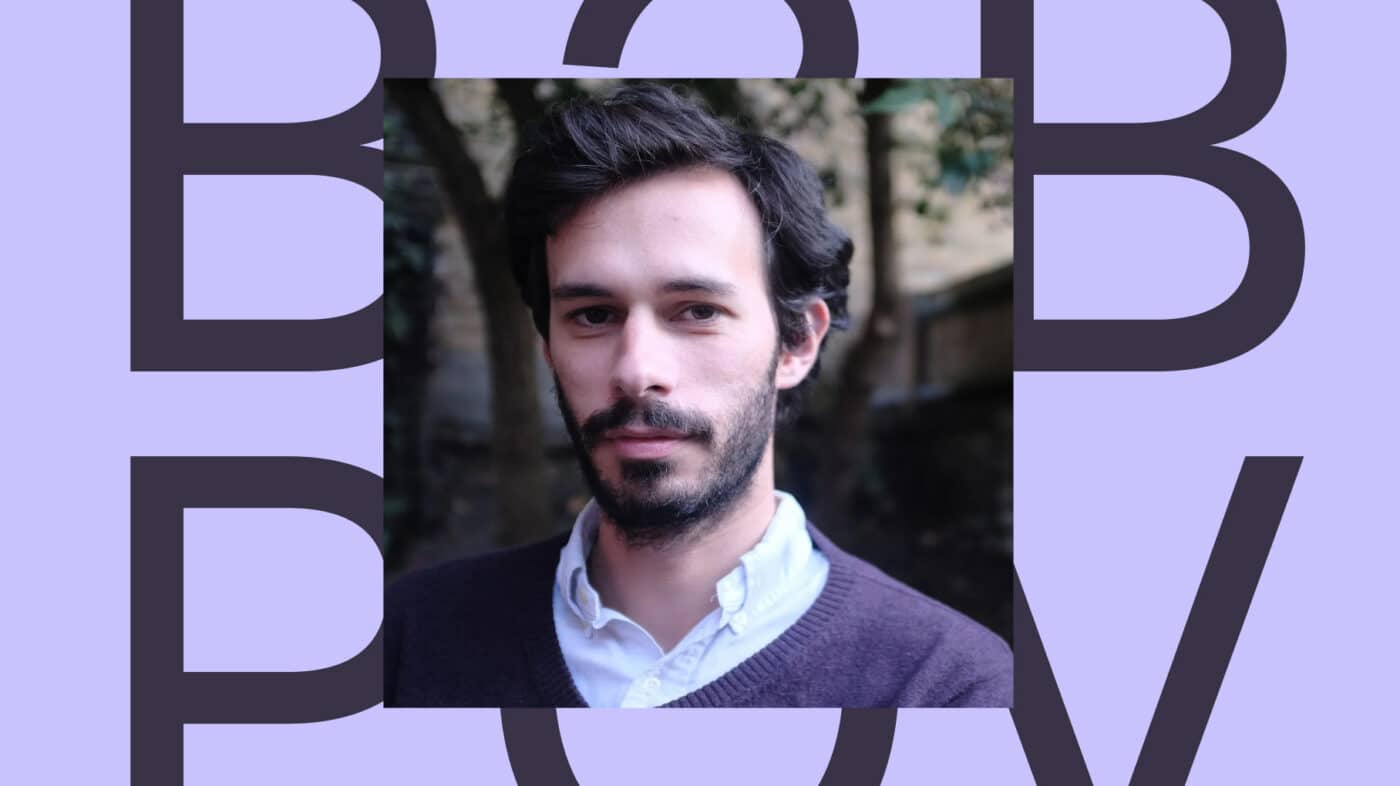
Carl Miller is a journalist, author, researcher, technologist and think-tanker who finds himself addressing NATO one week and the Loose Women another. That last honour comes courtesy of Kill List, his true-crime investigative series into the world of darknet murder orders, voted the best podcast of 2024 by the Guardian. It’s become not just a viral sensation but the driving force behind a number of criminal cases (and convictions) worldwide.
Our chat features a post mortem of the dark marketing tactics used by the criminals behind the Kill List, but our main subject is Carl’s life’s work: the study of power and our ability to control it – and how digital technology is constantly changing the rules of engagement. Much of Carl’s work analyses Big Tech and its potential abuses of power, but I was interested in what advice Carl might have for people who work in Small Tech, too.
The Q&A below is a written-up version of a Zoom conversation, edited slightly for brevity and to cut my ums and ahs. Here are some highlights you can skip to:
- An unlikely and “reasonably unwilling” crime investigator
- Telling stories about people, not just numbers
- The dark attraction of hidden power
- How-to guides for building addictive tech
- A sinister marketing case study
- Big Tech failings and lessons for Small Tech
- Making sense with metaphor
- On Carl’s horizon: AI and medtech
- Never say never been hacked
An unlikely and “reasonably unwilling” crime investigator
Adam Ketterer: Your website says “Carl explores the mysteries and dangers of the digital age”. Can we talk about the journey that led you to this professional summary? It was nice to hear you on “Kill List” talk about being an unlikely crime investigator or reporter. You talk about awkwardly cold-calling potential assassination victims on the phone, and how you “can’t even drive”, yet here you are, tapping into crime networks and speaking at NATO. How did you get here? How do you feel you’re positioned as this type of researcher or reporter today?
Carl Miller: Not only an unlikely crime investigator but a reasonably unwilling one, I think. It’s a great question, trying to find that thread. For me, it’s been a struggle to explain succinctly what I do. My career has involved radically different methods of learning about the world. I’m fundamentally a think-tanker and set up a digital research unit at Demos called CASM (Centre for the Analysis of Social Media).
For much of my early career, I worked on very number-driven ways of understanding the digital world, building new analytic technologies. That early project was about creating social media science or “SOCMINT” (Social Media Intelligence), turning social science into something data-driven using the data from digital life.
And not only a think-tanker but also a technologist. So with some colleagues, I rolled that out into a tech company called CASM Tech. It’s probably less visible than some of the other stuff I do but it now employs about 20 or 25 people, mainly natural language processing engineers. And that is really dedicated to building the actual underlying analytical technology to do the work that we were always interested in, which nowadays is much more to do with things like information integrity, and countering influence operations. And that’s normally the kind of thing that I actually talk about when I go to NATO.
Telling stories about people, not just numbers
Then there was a kind of pivot in around 2017 or 2018, where I wanted to learn about how to research and tell stories to do with people as well as numbers. That’s when I stepped back. I wrote a book, The Death of the Gods, and that was a lot more to do with actually getting to know the people on the front lines of all these social changes. And that was when I began to really become interested and to use the idea of power. I think it was always simmering under the surface in other work, but it became a lot more explicit from that point.
And from book writing, I suppose, grew journalism. After The Death of the Gods came out, I began to work more with the BBC, presenting programs for Click and BBC Trending and other bits of the BBC, basically turning some of the stories in the book into television and radio. And it was from there, really, that Kill List and this investigative, journalistic kind of thread emerged.
The dark attraction of hidden power
So you can see all of that as being quite tangled, and I suppose it is. I think careers quite often are tangled. I don’t have some kind of clear conception now, and I certainly didn’t when I began all of this, you know, over a decade ago.
I do think I’m drawn to looking at parts of the world and society that I think are overlooked or misunderstood or hidden – whether it’s trying to get clarity through numbers and make things less hidden through developing new methods, or whether it’s through investigative journalism or whatever the hell it was that we ended up being in Kill List, which I’m not quite sure is even really still journalism. But I do think that, one way or another, I’ve always been trying to shine spotlights and explain those bits of life to anyone who would listen, whether that’s policymakers or the general public.
So yeah, that description on the site is the best that I currently have. A bit of a tangle – think-tanker, technologist, journalist, author – and I know that it’s so suspect when you include all of those in a single sentence, it’s like, do you actually do any of these things?
AK: Well it’s certainly hard when you try and cold call an assassination target on the list, and they don’t believe you. They think you’re the scammer, which I loved. And it’s interesting what you say about shining a light on these hidden things with your work because, as you say in your book, power is often – by design – hard to define and hard to see.
It reminded me of Hypernormalisation, that Adam Curtis film, where power is deliberately hidden or confusing, or we just don’t see it. And there’s a lot of that in the tech world. The elephant in the room, I suppose, is data and the gathering of it. The profiling and selling of data. It’s one of those things that everyone kind of knows about, but doesn’t quite know about. And so many companies are – I don’t want to say complicit – but involved, because as soon as you start advertising or gathering customer data, you’re playing a part in that data economy. And there’s a responsibility there, right? You can enter that world innocent, but you can’t pretend to stay that way. You have to recognise that you’re a part of it and that there are hidden powers at play.
CM: Yeah. And there’s also a kind of dark attraction, I’m sure. I think people can be drawn, whether we like it or not, to forms of power which are powerful exactly because they are hidden and misunderstood.
AK: Right.
CM: So I think the kind of general argument I make in The Death of the Gods is that there are these new constellations of power that have emerged, be that in the hands of the hackers or network effects, harvesting companies or cyber criminals or Digital Democrats and other politicians.
And the second allied proposition I make is that in these new forms power has become quite wild in the sense that it sits outside of the cages that we try to build around power: norms, laws, regulations, professional standards, whatever it is. We’ve always tried to control the way the power works and in conventional forms power is often controlled quite well. There are tons of laws around how an attorney or a doctor or an accountant has to behave, but in the hands of people trying to remake democracy or trying to fight information warfare or trying to make technology more addictive, there is almost nothing. And this wild form of power is actually more powerful as a result of the fact that it is unconstrained.
How-to guides for building addictive tech
I remember maybe my angriest moment was when I had just been in South Korea, and I’d been at a rehabilitation center for Hikikomori: people that never leave their rooms or houses. They only live their lives online. And that’s a devastating thing to go through. It’s a long and painful period of therapy and rehabilitation to draw people out of that state, and on the way back from my trip I was reading this book called Hooked. I thought it was going to be this kind of warning klaxon about addictive technology – but it was literally a how-to guide for making your stuff addictive. Like, it was unproblematically serving up dopamine loops, and here’s how the cognitive psychological principles at play really work. And it kind of cheerfully lays out basically a series of design principles that one can use to make apps and platforms tap into the same kind of psychological mechanisms that gambling does around differential reward curves.
I think this stuff must be extremely attractive for any founder with a young company because, you know, you’re desperately fighting for market share, and actually fighting through all that noise is probably the most difficult thing of all. So you’re looking for all kinds to make your technology or offering euphemistically “create an itch” in the user. It has to be very tempting, and of course I would say it’s also very wrong – but there are no real boundaries or rules around that. We haven’t got any structures yet that say that is not okay. Completely unlike gambling, by the way, which, for all of its failures, is actually alive to the idea that gambling can cause very compulsive behaviors. At least, that’s an open conversation which continues to happen.
I think the nearest safeguard offered in that book Hooked was the idea that everyone making use of these principles should think about whether they would want to be on the receiving end. Having the founders of the technology do a simple thought experiment as to whether they would use their own technology is not a good way to create a kind of moral compass to use – especially when we’re talking about very powerful psychological principles to try and create or inspire compulsive behaviors.
AK: Yeah “Do unto others as you would have done unto you” seems a very quaint guiding principle, if it’s meant seriously in this space – which of course it usually isn’t. It reminds me of the way you talk about the internet in The Death of the Gods as its own place – almost like its own country – with its own dangers. And that therefore it needs its own rules. There should be, like, the Big Tech Code, some kind of Hippocratic Oath that at least gets founders or people with power to commit to.
CM: Yeah, I mean, I would create a new professional standards body, The Royal College of Algorithmists, and I’d have the other algorithmists strike off rogue algorithmists if they deploy technologies which are harmful. I think there’s a lot that can be learned from the way in which, say, the British Medical Council instills professional practices by doctors for doctors. We don’t have anything like that. We need to go through another burst of institution- and norm-building again to stretch bars around power in all these new places.
AK: That’s a nice analogy, having a Royal College of Algorithmists. And your career history can be much better tracked when you’re a technologist, right, if it’s written into the technology itself.
CM: Right. You have version numbers.
AK: Exactly. Bad actors trying to fork their past like a blockchain.
A sinister marketing case study
I want to talk about one of my favourite points you make in Kill List – without wanting to give spoilers away – which is that many darknet criminals like those behind the Kill List site are essentially digital marketers. They mix ecommerce, branding, PR, web development skills. They use a network of freelancers, who are often unaware who they’re actually working for. And it’s kind of a jolt, listening to it as a marketer.
CM: Indeed. Yeah, the guy behind the assassination site is a digital marketer. He probably has a series of legitimate or quasi-legitimate e-commerce businesses as well. That would be my guess. And he understands, I think, a lot of the fundamentals around all of this, and he has absolutely no scruples around doing whatever he thinks is necessary to make all this successful.
He understands attention capture is unbelievably important, and he probably worries about that more than anything else. So he ran a merry scheme to manipulate Google’s rankings on searches like “how to hire a hitman”, “hire a hitman”, and things like that for years – to the extent that his site was higher than the New York Times very often, within the Google Search rankings. He ran a massive backlink network of thousands of sites all linking to his. And so in that way, actually, he’s just doing a black hat version of what every company does, which is SEO.
AK: Right! I’ve seen lots of keyword lists, but never anything like “how to hire a hitman”.
CM: And because not many people search for it, I think it went under the radar. I never saw Google react at all. He also understands that if he can create not one but a whole series of seemingly independent outlets, he can make himself appear a lot more convincing. So the site that he actually points people to isn’t his darknet site. Obviously you can’t. It’s not indexed. What he’s pointing people to on Google search is a Hitman For Hire comparison site. And that’s when he starts to build his brand, so he’ll point to his own websites as the only legitimate murder-for-hire websites on the darknet. He’ll point to all his competitors, of which there are quite a lot, and he’ll say they’re all scams, they’re all useless.
He also knows that there’s kind of an attrition of people from the normal internet into the darknet, and he wants to make that attrition as little as possible. So he provides loads of advice about how you get on the darknet, here’s how you download the Tor Browser, here’s how you stay safe. You know, ‘we realize that this is probably a scary thing to do, but don’t worry, it actually keeps you safe’. And all this sort of stuff. So he provides lots of reassurance, then draws people down on to the darknet. And that’s when they find the site, which claims to be this neutral third-party escrow service. So they say, we connect you up with the hitman but we won’t release the money to the hitman until you’re happy with the service. So in that way they’re kind of pretending to be like eBay or something – this disinterested middleman.
He also knows when to dump a brand. So when complaints begin to escalate around a particular brand, he’ll just dump it and then recycle his website. So it will be called Internet Killers one day and Sinaloa Mafia the next.
And then he’s also carpeted the Internet with this kind of disinformation campaign, which is all to do with social reputation. He knows people will try to understand whether his websites are actually delivering murders or not – and we interviewed a series of freelancers that he’d co-opted into helping him create this campaign to try and pressure the police to close down his own service, because of all the murders that they were carrying out.
AK: It’s kind of genius.
CM: It’s super clever, yeah.
AK: My kind of recurring thought here is that it’s like an end-to-end case study of dark marketing.
CM: Exactly.
AK: SEO and link building and brand building, and how-to content marketing. And yeah, especially the kind of fake protest campaign trying to bring his site down. That was kind of inspired. It’s a bit of a cold parallel. A reminder that these skills can be pointed in very different directions.
CM: Absolutely right. In many ways Yura represents a very good case in point of this earlier theme that we were talking about, about the dark attraction of forms of power which are hidden and therefore so much more powerful. I mean, he probably isn’t more clever or more resourceful than your average B2B marketer. He’s just willing to do things that very few other people are willing to do. You know, I can’t imagine most brands would be – well I hope most brands wouldn’t be – employing a series of, like, crypto freelancers to paper the Internet with campaigns.
AK: Of course. It’s like an extreme version of the SEO and cybersecurity thing where they learn from the enemy and do black-hat or red-team exercises, right?
Big Tech failings and lessons for Small Tech
I think there is a serious warning when you bring it back closer to home for marketers. When you enter this brave new world online – mixing business and technology – you see where the temptations come in for Big Tech, like you explore in your work. But not just Big Tech – also what you might call Small Tech. And this is one of the reasons I wanted to talk to you on B2B POV.
If you’re a marketer or a founder, or an investor – whoever – in smaller companies, the same temptations and traps are out there. As soon as you start advertising online, for example, or asking people for their email address to subscribe to your newsletter, you’re faced with legal and, yes, moral obligations. And you talk about the kind of unusual shareholder agreements and voting rights that Big Tech founders exploit for power and control.
So I wanted to ask you about some of the things – to do with power and its abuses – that those working at smaller tech companies can look out for.
CM: I think it’s a genuine dilemma, and not an easy one when it comes to people running small and medium businesses in tech, because what they’re contemplating is a whole landscape of shades of grey. The law is very silent on a lot of these things. And so there’s one pressure which is like you’ve got this fiduciary duty to your investors, whoever they are – VCs or others, or your own angels. You need to be growing your company and using all the means you possibly can to make it successful. And so the temptation is to go up to the law, which is kind of what companies typically do like. You sit within the regulatory and legal frameworks that you’ve got, and that’s that. That’s why they’re there.
But the problem here is that because the laws are so silent when it comes to dark patterns, or when it comes to persuasive technology, or when it comes to, like, weird, freaky users of programmatic advertising and so on – there are all these different kind of moral dilemmas that a CEO will be facing where they will probably feel like they could engage in practices that would be both beneficial to the company and not illegal but would feel deceptive or icky in some way to actually do. And I think that’s the dilemma.
And there’s no easy and certainly no use moralising your way out of this. You’ve got to appreciate the pressures that technologists are under to make their businesses successful. There’s no point just saying, well, avoid all of that, because that’s not the reality that these people are working within.
We face this in our own way in CASM. Our dilemma was around research ethics. So we were seeing all these new, massive possibilities to research social media. But also we were worried that the general public’s awareness about what was actually possible with social media research was quite far behind, especially in the early days when we were using natural language processing to research tons of tweets. We were like, is it clear to people that this is how work might be used? And conventional research ethics didn’t answer those questions. You can’t get informed consent if you’re analysing millions upon millions of messages across social media.
Our way through was twofold, really. On the one hand, we drew some of our own lines about just fundamentally what we were interested or not interested in doing. So we weren’t interested in doing surveillance, we weren’t trying to identify individuals. So from the very beginning, we said, fine, regardless of what else we’re doing, what we’re producing here are kind of anonymous, aggregated data sets. We’re interested in big social movements. We’re not interested in finding individuals. And then the only other thing was that we tried to tie in a kind of active interest in discussing and actually researching and developing the ethics alongside the work.
AK: Okay.
CM: We would do projects where we would be polling people’s views around social media research. And what if it was done for this kind of purpose? What if it was done for that kind of purpose? So that at least you can kind of actively be part of the solution, as well as facing the problem.
AK: And I think that dilemma is an even more pressurised one in the tech startup world where you’re living the paradox that says you have to always be the disruptor, day-one thinking, and all that. Because if you’re not constantly disrupting the status quo, you’re becoming the status quo, which is a death sentence – but it’s also a side effect of success.
And even an organization like yours in CASM has to be at the cutting edge of research methods and research output, while honouring the integrity of the field. So you must find yourself with that friction of how far do we push it?
CM: Absolutely.
Making sense with metaphor
AK: One tangent I wanted to go down was the use of metaphors, which comes through so strongly for me when I read your work. The old and new gods.
Technology, of course, is a world full of metaphor. Because how do you explain any of the stuff we’ve mentioned like the internet or blockchain, or a fork in it, or angel investors… without metaphor? My question to you is: are there any key metaphors that you always come back to, or that you study, or even live by?
CM: Well, I think probably the metaphor that would be most apt is the cage. I’ve long been interested in power, but also desperately trying to work out how to make what I’m saying about wild power immediately make sense to people, especially when I’m delivering a speech or something.
In the next 10 years we have to rebuild new cages – whatever they are, like the norms we teach our kids or the laws that we create – and we have to make all of that as attractive and exciting and fast-paced and high-octane as the very technology which it’s supposed to control. You know, I’ve often thought that it’s the squishy human stuff that is actually far more important for us to worry about than the actual technology itself.
AK: That’s great, and I love that the power doesn’t really change in this picture, right? The power is always there, at bay to a greater or lesser extent. It’s the world – it’s the bars that change or bend and break.
CM: That’s exactly it.
On Carl’s horizon: AI and medtech
AK: Speaking of changing tech, you’re obviously someone who’s studied digital technology over the years and the generations. And you’ve seen these waves, from the internet to social to, you know, big data and web3 and AI, maybe quantum computing. I’m interested in what’s coming next on your horizon, what you might be seeing that maybe other people aren’t so alive to yet.
CM: It’s a good question and for sure I can see something there, and it’s a technology I’m not at all qualified to help people navigate or think about clearly – but to me, it’s obviously medtech. You know, it’s genomics. It’s quite clear, I think, that of all the different areas of science and commerce, the game-changing application of AI is in health.
I mean quantum is this kind of thread which runs through everything, and maybe it changes everything and maybe it doesn’t. But medtech doesn’t seem like it’s hanging in the balance. It seems like we’re already seeing unbelievable breakthroughs.
I actually did a podcast series on AI for Intelligence Squared about a year ago, and I went and spoke to all these different clever people building AI – from the fundamental engineers all the way through to the people using it – and there was nowhere near as exciting stuff happening anywhere else than there was in medtech. We do image recognition on scans for oncology, and now we can do 10,000 times more than we did before, and it’s far more accurate. All the way through to AlphaFold and various kinds of protein-folding AIs that are now allowing us to sculpt, you know, T-cells that will eat a particular kind of cancer.
I mean, it seems totally breathtaking. To me that’s far more exciting than like some Google agent or something that will book my hair cut.
AK: And the moral quandaries and regulations and power struggles – there’s a few books in that for sure. But maybe once you’ve recovered from the Kill List.
Again, without too many spoilers, you mentioned that the Kill List project has led to, what, 28 convictions and counting. That’s incredible. And literal lives being saved, right?
CM: Well, I mean, it’s hard to do a counterfactual. But yeah, there were definitely some very scary and dangerous circumstances.
AK: It’s an amazing piece of journalism. It must feel quite onerous at times: the personal burden on you must have been significant.
CM: Yeah, I mean it was. It was very difficult, of course, emotionally at times. I really didn’t look for the story. It kind of found me, so dealing with that responsibility was very difficult, not just for me, I think, but the whole of the small team that we threw together in order to try and deal with it. It also just went on for a very long time. We were kind of disclosing kill orders to the police, triaging them for years and years. The story begins in 2020, and really only ends with the actual active phase of the investigation at the beginning of 2024. So it’s an extremely long period of time and I think resilience is probably the most important attribute that we had to try and find.
Never say never been hacked
AK: Okay one last cheeky question before we go. Have you ever been hacked? And have you ever thought, I want to use my particular set of skills to, like, Liam Neeson them at their own game?
CM: Well, one thing that I’ve learned from going to DEF CON is that you never claim you haven’t been hacked and never claim you can’t be hacked, cause there are definitely very capable people out there that will put that to the test. I’ve never knowingly had my devices undermined, but that certainly doesn’t mean that I haven’t been hacked.
—
Want to be the first to hear when the next in our B2B POV series is available? Fill in the form below and we’ll send it straight to your inbox.


