The cost of dull, brand chemistry and the intoxication of the challenger life
Words: Adam Ketterer – Founder
Date: 18th October 2024
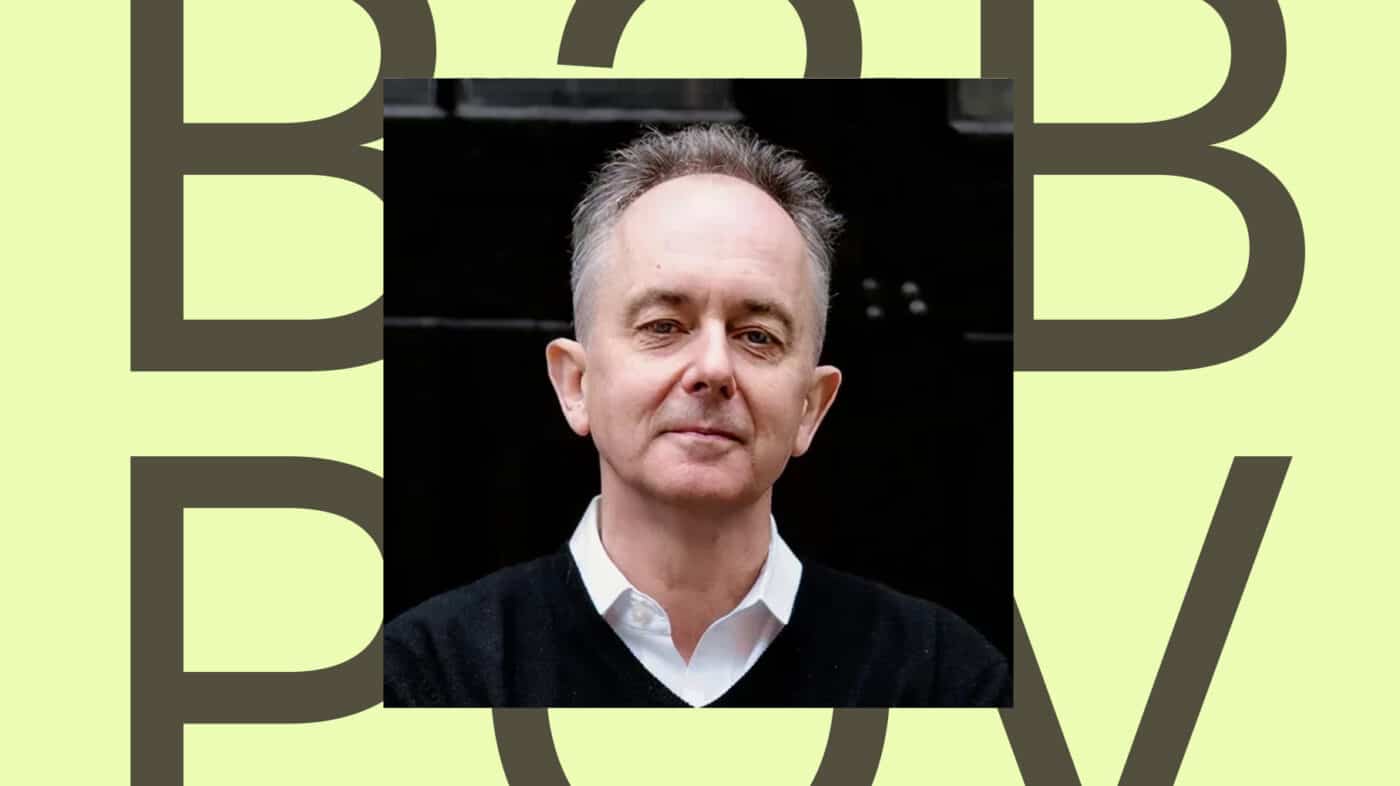
The founder of eatbigfish, Adam Morgan is the godfather of challenger brands, a term and – as we’ll see in our chat – a mindset that has remained relevant since he made it part of the marketing vocabulary 25 years ago.
He’s also a great example of a marketer whose POV on branding is one and the same with his approach to problem-solving in work and life: one characterised by resourcefulness, ingenuity and the art of finding opportunity in constraint.
He’s been busy recently working on The Cost of Dull – a collaboration with people like Peter Field, System1 and the IPA, that shows just how much boring advertising costs brands.
I thoroughly enjoyed our conversation. Hope you do too.
The Q&A below is a written-up version of a Zoom conversation, edited slightly for brevity and to cut my ums and ahs. Here are some highlights you can skip to:
- Three ‘Cannes types’
- How ‘The Cost of Dull’ came to be
- Flipping Binet and Field on their heads
- The $10M Dull Tax. System1 data and beyond…
- Walking the talk with anti-dull creative
- Brand improv: ‘colour or advance’
- Brand science: physics vs chemistry
- Positioning Adam: challenger connections everywhere
- ‘Challenger’ as a mindset
- A POV challenges the audience
- Surprise as an emotional switch
- Brands should be interesting on the inside
- Strategy is adaptive and succeeds by alliance
- Starting a novel, finishing a business book, and planning some children’s literature
- Applying business lessons to your personal life
- The intoxication of the challenger life
Three ‘Cannes types’
Adam Ketterer: Before we get stuck in, how was Cannes [the Cannes Lions International Festival of Creativity 2024]? Come across any interesting points of view out there, good work?
Adam Morgan: It’s an extraordinary mix, and it’s funny talking to people about why they’re there, because the reasons differ so enormously. So there are some people who are there for the work. And the work is kind of interesting and stimulating. It tends to be tactical rather than long-term brand-building. That’s the kind of beef that people have about it, but there’s still some amazing ideas and it’s exciting to be a part of it.
And then there’s a group of clients, characterised by one guy I was speaking to: very big, American-owned company that has done great brand-building in the past. And he said, I’m not here for the work. And I said well what are you here for? And he said I’m here to find out what my colleagues think about: Should I put all my money behind the last three clicks? Or should I put it behind brand-building? And I said well surely the evidence is in, you don’t need to choose between the two, you can do both of those things – that’s the whole point! And he said, No no no I have to choose, so that’s what I’m here to find out.
And there’s a third group whose primary job appears to be collecting as many wristbands that are proof of their entry to the Spotify party and the Meta dinner and that kind of stuff. That kind of badge of pride. You see them wearing them in a sort of tribal way.
So it’s a mixture! On the one hand you bump into some fascinating people and listen to some interesting stuff. On the other hand, there is a slightly depressing view about the way the business is going, and that sense of people being distracted, I suppose, by the channels rather than the right questions.
AK: Like those people who never take their festival wristbands off after Glastonbury or whatever. You probably meet similar types.
AM: I’m sure that’s true.
How ‘The Cost of Dull’ came to be
AK: And so you were obviously talking about The Cost of Dull out there on various panels. This is your recent collaboration with people like Peter Field and System1 [the ads-and-ideas-testing platform]. Where did that all start? You’ve known Peter for years but System1 – for me anyway – seem to have cropped up as a bit of a phenomenon recently.
AM: I think they are. Well, I mean, if you look at their stock price, I think it’s quintupled this year. I’ve been in the business just over 40 years. In fact, Peter and I started in the same agency together a week apart in 1982, and we were put on a bit of beer business – Courage as it was then – and he was my planner and I was his account guy, and we kind of worked on it as junior trainees together. So we’ve known each other a while.
And then, anyway, fast forward 40 years and I was reflecting on what’s changed in the business, and what’s the same. And I was reflecting on the fact that, for all that we’ve learned from people like Peter and Les about what makes communications more effective and marketing more effective, there’s still an extraordinary quantity of dross out there – and could we try and quantify that? Is it just a subjective opinion of mine, and I’m turning into Sir Bufton Tufton? Or is it actually true? And secondly, what could you do about it?
So if you look at System1 data, it confirms it. I don’t know if you know how much you know about how System1 works, but one of the key things that they measure is…what do you feel at the end of seeing an ad? And obviously they’ve tested 55,000 ads in the States, and you know, I think as many again in the UK. They’ve got a huge database. And roughly half of the ads in the UK leave people feeling absolutely nothing at all – and that rises to 60% in B2B.
Flipping Binet and Field on their heads
So I had a conversation with Peter [Field] and said, all that wonderful stuff that you’ve done where you’ve looked at the upside of effectiveness and creativity… Could we actually take a leaf out of Daniel Kahneman’s book – if Kahneman showed us that loss aversion is more powerful than anything else, that the pain of losing something is twice as powerful as the pleasure of gaining it – why don’t we flip it upside down? Could we take yours and Les’s work, and look at what’s the cost of not being creative rather than what the upside of being creative is.
So he said, Yeah I’ll have a go, and he did an initial piece of work. You have to use proxies, obviously, because the question is, what do you mean by dull here? So as proxies for dull he used information-based work and, you know, rational persuasion-based case histories – and bear in mind these are still successful case histories! And then as a proxy for interesting he used more emotional stuff and so on.
The £10M Dull Tax. System1 data and beyond…
And what he found was that for an average campaign, it costs you £10 million to be dull. That’s to say it costs you £10 million more in the media that you have to buy to get the same commercial impact. So that seems a really interesting starting point for us! And once you’ve got a figure like that, and you think actually I can put a cost on dull – let me try that out on a few people and see what’s interesting to them.
And people really respond to it. It’s slightly surprising that you can actually put a cost on dull and so we then started to play it out with the System1 database, looking at the cost in the US. And we’re now looking at it by B2B, and certainly even within banking we can split out B2B and B2C for instance. We can look at Pharma. So we’re starting to look granularly within categories.
We also appealed to other sort of data holders to see what they’ve got. And we’ve had two or three that have information further down the funnel, which is useful because obviously System1 and the IPA is mainly data from TV advertising– which you could argue is the most impactful and engaging medium of all apart from obviously, some of the newer ones like Tiktok…
Then we’ve also had a very interesting approach from somebody who’s from the field of entertainment, who is testing entertainment properties, which you could argue are the most interesting things to promote and advertise. And they’ve got some interesting data. So it’s moving! I think the trick with all of these things is, if you want it to maintain some traction, how do you continue to make it interesting at the same time? How do you make it deeper at the same time?
Walking the talk with anti-dull creative
AK: One way you did that was with the creative and comms around the campaign. I was curious about how much effort you invested in that side of things – for a campaign that really walked the talk in terms of fighting dull.
AM: I mean doing events like Cannes is useful, right? Because you’ve got an audience who are actually themselves there, probably because they’re not producing a lot of dull stuff, or don’t want to think they’re producing dull stuff. So in a sense, you could argue, we’re talking to the wrong people. But actually, even there, even in those large businesses, of course, there’s this kind of extraordinary range of dullness and interesting going on.
And so one of the ideas that we had was, okay, let’s take some 30-second bits of film of famously dull things and put them through the System1 database. So we looked at, you know, a snail just going across the screen for 30 seconds. We looked at a cow chewing grass in a field. We looked at paint drying… And the cow chewing grass – which is a nice shot! It’s a locked-off shot with a cow chewing grass in a field – beat 50% of ads in terms of System1’s response data.
And, okay, is the cow advertising anything? Is it a bit of a cheat? But the point is, in this kind of situation you’ve got, you need some ideas. You need logic and magic to travel together. So we’re starting to introduce ideas that are also creating some conversation, I think, and shareability. And, in fact, I challenged Jon [Evans, Chief Customer Officer at System1] to shoot an ad for no more than £50 that was about watching paint dry, and seeing how far he could outperform – and I think he outperformed 80% of the database, anyway. So it’s a mixture, really!
Brand improv: ‘colour or advance’
AM: Have you ever done any improv?
AK: Never done it.
AM: So there’s an improv technique called ‘colour or advance’ where, let’s say, we’re telling the story of the Red Riding Hood, and it’s my turn. You can only say two things to me. You can say colour or advance. If you say colour, I can’t advance the plot at all. All I can do is describe. So there’s this little girl on the edge of a wood, and she’s in the red thing. She’s got a large picnic basket and the basket’s kind of weighing on her, okay. And then you say advance. So now I can’t describe anything more. I just have to talk about the plot. So she’s walking along, and there’s a glint of teeth in the woods, far off, and she hears a crack of a branch… And you say colour again…
So the point is, in keeping something engaging, if you just colour, it’s very dull. If you just advance, it’s very dull. You’ve got to have both, and I think the secret about The Cost of Dull, or anything that one’s trying to bring attention to, is how do you keep colouring and advancing at the right speed? So if we’re still talking about The Cost of Dull in the same way with the same database in three months time, it’s gonna be really boring. We’ve got to keep advancing the database. But at the same time we need ideas.
It’s obvious to you and me, and as brand-builders. But I think part of the issue, perhaps for our category and what we’re trying to do, is that we need ideas that are going to bring some of these things to life and get people talking about them. And it seems to have caught fire. People seem to be really intrigued by the idea of putting a cost on dull.
Brand science: physics vs chemistry
AK: It’s funny – you mention our category, if you like. It does seem that marketing and brand agencies nowadays tend to pitch on ‘advance’ and not ‘colour’, right? They pitch on their process and they pitch on, you know, we’ve trademarked this Super Loop Figure of Eight of CX or whatever, and this is what we call it, and it’s like … OK, cool. But do you have any good ideas? Where’s the ‘colour’, if you like?
AM: Yeah, I think that’s right. And yet clients will say it’s all about the chemistry. So it’s curious, isn’t it? There’s a great article by – sorry this is way off-track –
AK: Go for it.
AM: It’s a great article by Mary Portas – I don’t know if you read it – at the beginning of lockdown she wrote an article in the FT. She was talking about which fashion retail brands would survive, and which would fail. And she said, look, obviously COVID, is going to be an accelerator in fashion, as it will be for so many other areas. The retailers that actually weren’t in very good shape will go down, and they’ll probably go down five years earlier than they would otherwise have done. The good ones will survive.
And the difference between the good and the bad is a difference of physics versus chemistry. The bad ones think it’s all about physics. It’s all about four seasons a year. It’s about a certain amount of footfall. It’s about a certain amount of stock rotation. The good ones understand it’s all about the relationship and the experience and the chemistry with the customer. That’s actually what you create, and that’s what you feel. And it’s the same thing you were talking about – I think agencies generally tend to talk about the physics of what they do with the client, and they don’t really understand it’s really about the chemistry of the relationship and what they’re gonna create with them. Right? That’s what their client really wants to buy.
Positioning Adam: challenger connections everywhere
AK: Love that analogy. And I mean, and you’re an agency guy as well, and it’s been 25 years of eatbigfish, right? Well, of the first book – and maybe the agency started at the same time?
AM: Same time, yeah. Exactly.
AK: Well congratulations. And so one of the most interesting things for me in these chats is talking to people like you, and asking – you know we talk about positioning products and services and companies – but what about positioning you, yourself? I imagine to most you’re the Challenger Brand Guy who’s written all these books. Does that still serve you well? Has it evolved? Ever wanted to shrug it off?!
AM: Well, first of all, my love remains challengers – partly because in a world where 50% of our stuff is ignored, challenges are the anti-blah, right? They’re always doing something interesting, and I’m always trying to do something more interesting. So just in terms of swimming in those waters, and being a student of those brands, I find it enormously exciting. And it’s all sorts of different parts. You know, A Beautiful Constraint was looking at the benefits of constraints. And it’s led me to explore areas which again, I think, are actually relevant to a much broader group of people.
And arguably The Cost of Dull is particularly pertinent for challengers, and, in fact – talking to Dr. Karen Nelson-Field – she’ll talk about the fact that in a world where you’re trying to build memory structures, being dull is particularly punitive for a challenger. If you’ve got a memory structure you’re trying to reinforce as a market leader, then, in a sense, being dull is kind of okay. People don’t pay too much attention to you, but they’ll still notice that thing that you’re trying to reinforce. But for a challenger, trying to build it is absolutely key — so if you’re really interested in it, you can start to see connections with what you’re doing around challengers everywhere!
‘Challenger’ as a mindset
AM: But the big shift we’ve made, I suppose, is that when we started, because the name of the first book was about how challenger brands can take on market leaders, people thought of it much more as, oh, you’re for challenger brands per se. And now, actually, we talk about change of mindset much more. What we’re finding is that there are larger companies who say, look, we’re never going to call ourselves a challenger but at this particular moment in our lives on this particular project, this is an inflection point for us. We need to bring much more of a challenger mindset. So we, as a team, need to think and understand what that means. We need to understand what we’re going to challenge internally as much as externally – so that notion that, actually, it’s a cultural as well as strategic project. Helping a client to bring a challenging mindset to what they’re doing has been a useful kind of unlock for us.
A POV challenges the audience
AK: I read somewhere that you said challengers are ideas-led, and those ideas can break out of the category the brand is in. A challenger says we have a point of view about something in our world or beyond – and it struck me that what they’re really challenging is the audience, right? Their assumptions, or their kind of their default behaviour.
AM: Yeah there’s a good example of that. It’s not a B2B example but I’m really intrigued by… Do you get the Zoe app targeting you on Instagram at all?
AK: The microbiome stuff? Yeah I think I’ve seen Davina McCall slapping a sensor thing on her shoulder.
AM: Yeah – but a lot of their stuff is exactly about this. It’s about challenging the customer. So they’ll talk about the fact that most of what you know about health is wrong. Which, by the time you get to a certain age, you think I’m really well read on health. But Zoe comes along and they say here are seven diet myths debunked, and one of them will be about how, you know, you shouldn’t eat full-fat dairy, that’s bad for you – and they say no, no, in fact, full-fat dairy can be beneficial to you, because it keeps fuller for longer. So it explicitly takes on your assumptions about food and questions them in a really interesting way, in a kind of a firm-but-friendly way. It’s not strident, but it’s just a very interesting example of a brand that’s very explicitly doing it. I mean, clearly, they’ve got a science-based brand and they’re trying to change lives around that. But, for instance, I don’t see pharma brands doing that in the same kind of way.
AK: And is it the tone or just the fact of it that’s the difference?
AM: I think it’s a sharp poke in the ribs, saying hey your key assumptions are – I mean they’re trying to surprise us, right? And as we know, emotion and surprise are two incredibly strong levers for marketing and creative engagement. It’s just nice to see someone doing it deliberately and intentionally and strategically.
Surprise as an emotional switch
AK: I think it was Jeremy Connell-Waite [Global Communications Designer at IBM] I heard talking a while ago about how there are something like eight core emotions that we can tap into in communications and surprise is one of them – but it’s a special one because it’s the one that you can use to flip someone from a negative emotion to a positive one, or vice versa. So if our goal is to create some kind of change in people – what they think or feel or buy – then surprise is essential.
AM: Yeah, and one of the big winners at Cannes was – you’ve probably seen it – the French ad from Orange about the female football players [the one that uses deepfake tech to show what appears to be the men’s team playing football brilliantly, only to reveal that it was actually the women’s team all along].
AK: Oh yeah, loved that.
AM: I talked to the agency that produced it and they said that the strategic problem was that French media channels were not proposing to cover women’s football. So there, there was a sense that the quality wasn’t good enough and that people wouldn’t watch it. So you know it was, it was a lovely creative idea. But the underlying challenge was a strategic one, which is: we need to challenge people’s assumptions about the quality of women’s football in France, and that the gap that they see between men’s football and women’s football is not nearly as big as they thought it was. So the execution is a representation of that.
So again it’s a question of, strategically, what is it we need to challenge in order to really break through here? It’s not a question that’s asked enough. And that’s right at the heart of being a challenger – it’s about asking what you’re challenging rather than who you’re challenging.
Brands should be interesting on the inside
AK: And that’s a really nice question for a brief! What is it we want to challenge? What can we apply this lever of being interesting – versus dull – to? And I wondered what other multi-million-dollar levers you think challenger brands can pull?
AM: Well, I wrote a book in 2015 called A Beautiful Constraint with Mark Barden. We had a chapter called The Fertile Zero, which looked at people who had next to nothing in terms of resources and yet have still managed to achieve a lot. And we looked at what they had in common.
So the guy who invented the Hendrick’s and Sailor Jerry brands talked about being interesting on the inside. He said you need to give people stuff to write about. So we create these quite rich inner stories that people write about. He deliberately creates a lot of conversation.
Strategy is adaptive and succeeds by alliance
I suppose the other thing is this notion of alliance and scale. There’s this fascinating book by Professor Lawrence Friedman, who’s the professor of military warfare at King’s College, London. He wrote this enormous tome called Strategy in which he looks at a successful strategy all the way from primate colonies to contemporary politics and entertainment. And he makes the very simple point – he says there are three commonalities throughout all strategy.
One is that strategy is adaptive. You know, a strategy is not the same as a plan. And he starts the book with the famous quote by Mike Tyson about “Everyone has a plan till they get punched in the face.”
But the second point he makes is about alliance and coalition to scale. So he says that actually, human groups succeed by alliance. So whether it’s in primate colonies, whether it’s in military campaigns of warfare. Look at Churchill. If you’ve seen The Darkest Hour, you know the first thing Churchill does when he becomes Prime Minister is try to get the Americans to join the war, and it takes him 18 months. He’s not trying to do this on his own. And so I think that sense about partnership and scale and partnership in a really fundamental level – you know, not something that’s dealt with by a head of partnerships who sits at a completely different level from you. I think that sense of alliance and coalition is really interesting for us.
I’ve been doing a podcast called Let’s Make This More Interesting and, it being an Olympic year, I’ve just interviewed someone called Helen McGill, who was the head of spectator experience at London 2012. And one thing she talked about was the fact they had very little money. So she had to really think about the resources that were already around that she could access, and she talked about two of them.
So one is, she said, you know the park’s a big place! We could introduce buskers – London street entertainment – into the Park at no cost to us, but that would enrich the experience, if chosen carefully. And the second thing was, she said, there are all these speakers dotted around the park for informational reasons. And said to the speaker people, can I use these? And they said, yeah, just take them when we’re not using them. So she said great, I can create soundscapes and stuff.
So I think there’s a point about resourcefulness that can be like a £10 million pound lever. We tend to think of resources as things that we control or are given to us – but actually, the resources we can access are probably going to be at least as important as the resources we control.
AK: That’s great. And going back to what you said about being internally interesting. It reminds me of that old ad – by one of, you know, Abbott or Ogilvy – that was selling shirts, and the guy is wearing an eye patch.
AM: The Man in the Hathaway Shirt.
AK: Yeah! And it’s like, hmmm why is he in an eye patch? And, well, the question is the answer, right? Creating that little unexplained intrigue is memorable.
AM: It’s an interesting story – I don’t know if you’ve read about it – because that wasn’t intentional. Someone found it on the way to the shoot, I think, and thought, we’ll just add it in. I mean, it’s just one of those wonderful accidents that they added in that made it!
Starting a novel, finishing a business book, and planning some children’s literature
AK: Excellent. So I also wanted to ask a few more personal ones – and again feel free to tell me to show up. But I heard somewhere that you were writing a novel, and then you ended up writing Eating the Big Fish instead. So you set out to write some creative fiction, and you wrote a business book! What happened there?
AM: I was writing a novel. I’d taken a sabbatical five years earlier to write the first draft of the novel, and I liked the idea of it. I thought it was a funny idea. It was about – and bear in mind this was the nineties – it was about a brewer. There used to be an American brewer called Alan Bond. You might not remember him, but he was sort of an American who owned lots of breweries – Swan and various other ones – and he also owned various media companies. So the novel was a black comedy about an American media-slash-beer tycoon who decides he’s going to launch the world’s first global beer. And he decides to sponsor a revolution in Southeast Asia where the rebels and the government forces are poised quite equally, and he’ll give rebel forces X millions to buy their missiles and whatever it is – as long as they will wear his brand’s T-shirts when the world’s cameras are on them. And the cameras will be on them because he owns three of the big media stations. And it’s about the account manager at the London agency who’s sent out to be the account manager in charge of the revolution.
And you know, I realised I’m a very, very slow writer. So I needed a second bite at it. But then, actually, I got interested in this challenger idea, and I thought perhaps it’ll be easier to get published in fiction if I’m already published in nonfiction. And so I thought I’d write the book, the business book, and then see what happened afterwards. And I have got various novel ideas, but I’m going to focus actually on writing children’s books in future, just because they’re shorter and easier, and I’ve got an agent for them now. So that’ll be my creative side hustle. Novels are just too much hard work.
AK: Oh very nice. You said you have kids right, so you’ve been through the whole kids’ book library and maybe thought, I can do this! Even with David Walliams cornering the market.
AM: Yes celebrities certainly dominate it these days.
Applying business lessons to your personal life
AK: I also saw somewhere you said you find yourself applying your kind of business principles to your personal life as well.
AM: Maybe the most interesting example I think, for you might be that when Mark and I wrote A Beautiful Constraint, we said to ourselves, we need to apply the principles of the book to ourselves. So what’s our ambition? What’s our constraint? And we said, okay we’re going to try to get on one of the American best-selling book lists, and to do that, we’ve got to sell 5,000 copies in the first two weeks. And we’re going to do it with a marketing budget of zero.
So how are we going to do it? And we thought, this is simple: we’ve got loads of friends in advertising agencies so we’ll phone them up and say, great news! We’d like to launch our book in your reception! You’ve got these lovely atriums in agencies in LA and New York, San Francisco and Chicago, so if you could just invite some clients and put on a few drinks, that would be fantastic!
And they said, wow, you’ve been out of the business a long time haven’t you? We can’t afford to throw free drinks parties for friends. That’s just not a responsible thing to do any more. So we said, oh okay, well what’s the expensive thing here? It’s the drinks, really. So let’s ring up our old drinks clients and ask them for free drinks for the party! And we rang them up and they said, you’ve really not understood our business model at all, have you?
So THEN we thought, mmm, okay we’re framing this in the wrong way. Let’s frame this as an influencer event. We are going to have fourteen parties in two weeks with some of the most creatively influential people in the advertising industry in America. Have you, dear drinks clients, got anything you want to launch or seed at these events, that this could be the platform for you? And one of them – Sky – said yes, we’ve got a new cocktail range we want to seed. This would be a great opportunity. Why don’t we give you a cocktail bar and a cocktail barman and a brand ambassador for all your parties? So we did fourteen free parties in two weeks. Ended up being hosted by Google in New York. And that was the launch of A Beautiful Constraint in New York!
The intoxication of the challenger life
And once you’ve done that, you realise okay, actually, if you approach the world in this way – that you can have very little but if you think about it in imaginative ways, you can turn constraints into an advantage – it becomes completely intoxicating. You can’t close that door. It becomes utterly addictive. Even my wife says, Adam, what’s the opportunity here? And says it entirely seriously. So it’s had a huge effect on my life, and I only wish I’d found it out when I was eighteen or fifteen or twelve really! Because it’s been so beneficial.
—
Want to be the first to hear when the next in our B2B POV series is available? Fill in the form below and we’ll send it straight to your inbox.