Focusing your positioning, writing great homepages, committing to untestable startup ideas, and the pastor-to-sales pipeline
Words: Adam Ketterer – Founder
Date: 13th June 2025
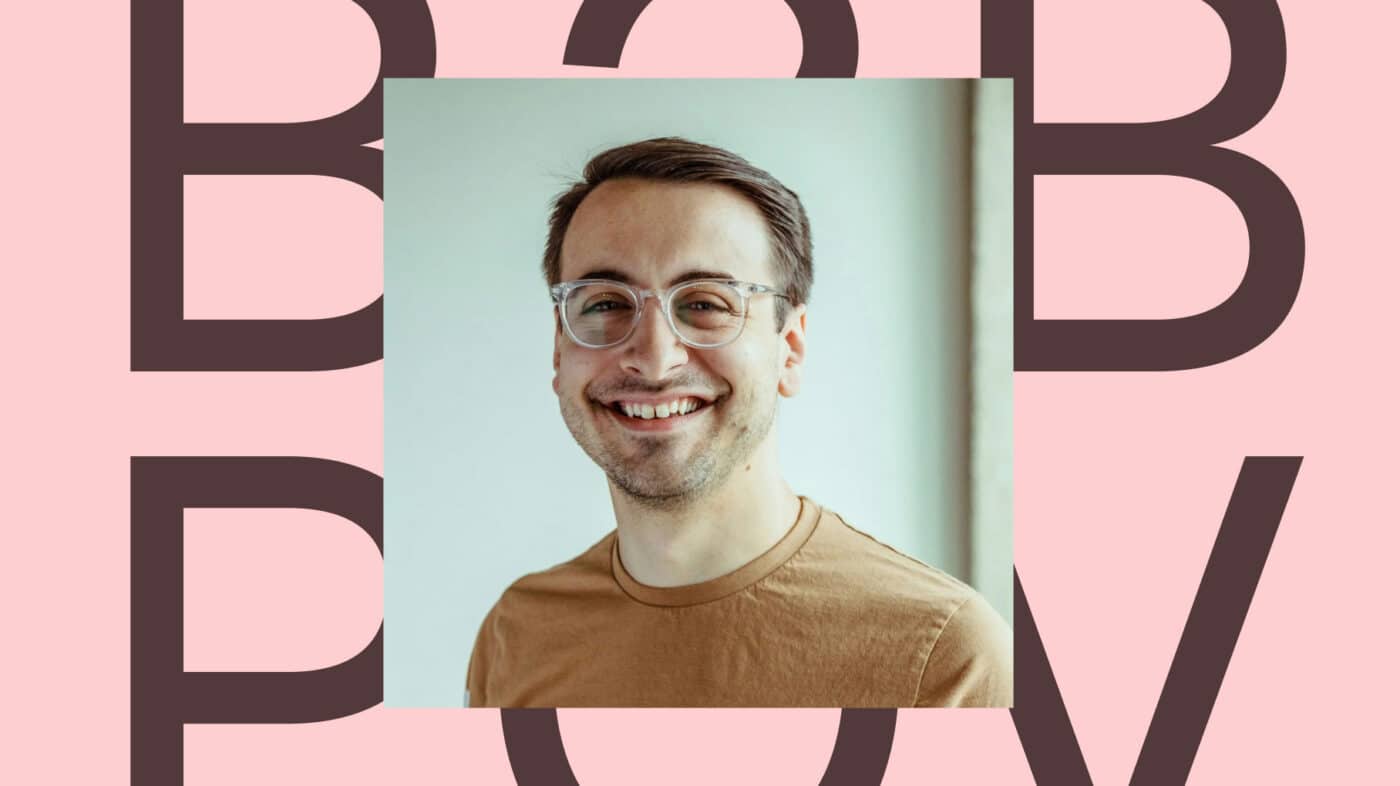
Anthony Pierri, co-founder of FletchPMM, helps early-stage SaaS companies refine their positioning and put it to work on their homepage. His own story balances a tolerance for ambiguity with a full appreciation of the importance of focus, clarity and commitment to a thesis – whether it’s a band or a startup idea.
He and Rob Kaminski have built a lean, fast-growing consultancy – thanks in large part to their (often spicy) LinkedIn content which, as we’ll learn, went viral from the get-go. Their ability to illustrate high-level positioning principles with specific real-life examples always brings theory and practice together nicely.
I was looking forward to this conversation, and Anthony did not disappoint.
The Q&A below is a written-up version of a Zoom conversation, edited slightly for brevity and to cut my ums and ahs. Here are some highlights you can skip to:
- Life before FletchPMM: Making music and building audiences
- The pastor-to-sales pipeline
- Finding a home in homepages
- Becoming interchangeable with your co-founder
- The company – not the consultant – must own the positioning
- You can’t A/B test your positioning
- Finding your niche as a service business
- Protecting that niche by saying no
- Selling a service like a product
- You can’t validate a startup idea quickly
- The problem with category creation
- The future of the homepage
- The impossible dream of one-to-one positioning
- Positioning is a social phenomenon
- Distilling a positioning down to its most important elements
- When to switch from a use case to a category-based positioning
- Turning a positioning into copy: Answer these four questions
Life before FletchPMM: Making music and building audiences
Adam Ketterer: People know you as a co-founder at FletchPMM, along with your partner Rob [Kaminski], but you’re also a musician, right? And I’ve seen you talk about how you used to be a pastor before you got into product marketing. So maybe we can talk a little about how you got here.
Anthony Pierri: Yeah, for sure. I would definitely describe myself as a self-starter. And I’ve always been fine with areas that are filled with ambiguity, where things are new, or you have to try something different. So that’s one side of it.
The other side of it is really that I’ve always loved audience-building in one form or the other. So from age 10 to 14 I was in this band with my older brother. We’d put out music, and at this point the main music platform was Myspace. That’s how you got your music out there as an indie musician.
So we’d watch the plays go up, and we loved that. Over the years, the shows would get bigger and bigger, more people would come. So I was like, this is just so cool to grow something with lots of people, which is funny, because that fits more within a B2C framework, you know? Sell to a bunch of individuals. But now I’m very much in B2B.
I did lots of different bands after that and I was always trying to grow the bands and the online audiences as well. So using things like content, videos, platforms like YouTube, Twitter.
And then I volunteered at this church in high school, and we worked for this high school youth group – and, same deal, we were always trying to grow the youth group. I played in the band, and over four years, the music got pretty good. So the youth group started growing, which is super fun, then I stayed on at the church, and I helped to launch this new service.
So yeah, I like launching new things, and growing audiences. Those have always been the thread throughout everything that I’ve been doing.
Then after college I went to work at a mega-church down in the city of Chicago. And my boss was, like, the main guy, and he said I should think about becoming a pastor – because in the church world, you get promoted and there’s only so many steps before you enter the pastoral world, if you want to keep moving up the ladder.
So I was like, Okay! So I had to go to seminary. I did a Master’s degree in biblical and theological studies, which was pretty funny. Don’t really use that much anymore, as you can imagine in the current gig. But you know, did that, and then basically launched this church service. And I got to kind of be in charge of it, shaping again audience growth, trying to get more people to come.
The pastor-to-sales pipeline
Eventually I left the church world after like 11 or 12 years in a professional capacity. There was this product development, product design, product management agency – through a guy that I used to work with at one of the churches, who had been consulting with them. They were looking for a sales role. And so there’s the pastor-to-sales pipeline. Pretty standard because pastors are always selling, effectively, right? So I get into this sales role, and I like to joke that it was an entry-level sales role, but after 11 years of promotions and pay raises in the church, taking an entry-level sales role in tech was a pay raise!
We were basically cold calling and cold emailing. And the company was more of a custom service agency, so we would work with lots of different people for various reasons. Which made it really hard to do business development, because I was like, if we don’t have a defined offer and/or a defined audience, it’s almost impossible. So I’m banging my head against the wall for nine months. I’m reading all the books on sales and outbound and marketing, and by the end of it I was like, I don’t think this is going to work, because I think you have to either choose a defined service or defined audience, and if both are wishy-washy, it’s like, what are you doing? What are you even selling?
So I was worried that I was going to lose my job, but the founders were great. They were like, you know, we’re going to try this sales thing with a lot of ambiguity. And the guy who recommended me was like, “Oh Anthony thrives in these really ambiguous environments.” So then I was like, well, just put me on the product management side of the house as low as possible.
And then I met my current co-founder, Rob, at that company. And we became buds. The founders were talking about building some sort of productised, repeatable service that would solve a lot of issues. So I basically volunteered to get on that project with Rob and another guy on the team. And the three of us were trying all sorts of different things, and then I was like, I keep hearing people using LinkedIn to reach this exact client base.
Now, I had never posted on LinkedIn in my entire life. I knew nothing about the platform. But I do know content relatively well – I had been building content to grow audiences for the last decade or so, for all these bands and other things, right? And it had various viral successes on different platforms and stuff. So I was like, how hard could LinkedIn be?
The first post I ever did on LinkedIn went viral. It was like a quarter-million impressions, hundreds and hundreds of likes, all these people commenting on it. And then the second post I ever did also went viral. So I’m like, this platform is going to be a breeze. And then I had a long string of non-viral posts. But with the initial success I was like, there’s something here.
So then we start posting all the time, and we’re trying to figure out what the service could be, using the posts as a barometer of the market interest. And then we discover that there’s this niche of positioning that people are interested in. And we would say, can we reverse engineer how a company is positioned based on what’s on their homepage?
I’m looking at all these homepages. And very quickly, it was like, Oh, my gosh! None of the homepages are clear, nobody is saying anything, and these are all just filled with fluff and jargon. And my co-founder, Rob, he’s had a really long career in startups and entrepreneurship, so he was able to diagnose a lot of deeper issues.
Finding a home in homepages
And so eventually people started asking us, “Can you help me figure out my positioning and also rewrite the homepage?” So the market kind of pulled us in this weird, niche direction.
And Rob, too, had read all these books and listened to podcasts about productising services, offer design, pricing. So he brought all that knowledge that I did not have, and I brought all of the content and distribution knowledge, because he had for a long time been like, I would love to build an audience. He had taken some of Justin Welsh’s courses about content stuff, but he had never gotten over the line.
So the two of us just really started meshing – him having the startup knowledge and the entrepreneurship stuff, and me having the content. And the posts all really start gaining traction, and then the client base starts flowing in as the business starts to form.
And so we launched Fletch and for a couple years we’ve gotten to work with a ton of really cool B2B companies, lots of startups, VC-funded. And we’ve really got to hone our model, doing so many different iterations. So yeah, it’s been a wild ride. That’s probably the longest answer I’ll give you ‘cause it’s all background and overview!
Becoming interchangeable with your co-founder
AK: I was actually going to ask how you and Rob divvy up the work, and now it clicks. And not to go all Ben Horowitz or whoever it was who said that the perfect startup co-founding pairing is the inventor and the business person.
AP: Yeah!
AK: You’ve got, like, the startup guy and the content guy.
AP: It definitely started that way. And now we have both filled out the gaps on both sides. So now we joke around that we truly are interchangeable, and some people on LinkedIn think we’re secretly the same person. Now, after doing 300 projects, and Rob having posted so many times, we both are pretty interchangeable in our content, in the delivery, and we have a team that is basically: me, Rob, and our copywriter, Kate.
We used to run all the projects together. Now we do them separately. So now it truly has become like two CEOs, and if we ever start a bigger product company or something, we’ll probably still be two CEOs.
AK: I wanted to ask about that, who writes the homepage copy – because I imagine you and Rob were doing it originally.
AP: We were.
AK: Well that’s exciting for the business, starting to hire. And the fact that you and Rob have kind of met in the middle in terms of skills, learning from one another. You’re among a growing group of people on LinkedIn with, like, a personal brand emoji next to your name – you’ve got the guitar and Rob’s is the target, I guess for positioning, right?
The company – not the consultant – must own the positioning
But the one thing I really like about your style doing the positioning work is that you and Rob frame yourself as guides. You’re not so much making recommendations to your clients – instead you’re saying, Look here’s a decision you have to make. You’re forcing decisions. Is that an accurate summary?
AP: Yeah, I think so. And Rob and I, we have conversations about this all the time. Sometimes – when the client’s hitting a wall, and we’ve tried everything we can do to get them to pick – although we’re hesitant about it, sometimes we’ll insert ourselves just to break the tie. We’ll say, If I was your head of marketing right now, this is what I would do.
And we try to do that sparingly for the exact reason you’re talking about, because if it feels like it’s imposed from the outside, I don’t think it’ll stick. We’ve chatted with April Dunford about this and she said the same thing. She was like, you have to own the positioning – you, the company. A consultant can’t own it for you from the outside, so you can really only guide them through and get them to pick. We even use deliberate language around this. In the first workshop we run with a company, we say we’re going to surface the viable positioning options based on everything you said. And sometimes there’s seven or eight of them, and then we just kind of go around and ask which one of these do you think you could make work?
You can’t A/B test your positioning
That’s another thing: because we deal in homepages, a lot of times there’s this weird overlap where people will think of us as like conversion rate optimisation specialists, which we are not.
I mean, we try to say that we’re doing homepages that would be optimised for conversions in general. But we don’t do an A/B test of the new positioning versus the old positioning, because most companies are not selling a shoe or a water bottle or something. They’re selling a complex B2B product for different people with different use cases. And sometimes what people forget is that the success or failure of the positioning is also somewhat related to the will of the founders and their ability to shape the world around the vision.
The ultimate example being people like Elon Musk, who comes out and nobody’s doing electric cars, and he basically shapes the world into wanting electric cars based on all these things, right? He couldn’t have A/B tested that. You know what I mean? “Oh, I have a website that says we’re making gas cars. Let me flip it now we’re making electric cars.” And then all of a sudden be like, Oh, conversions went up. That’s not the right framing of what we’re actually doing.
So a lot of times we look at these options that represent very different 12- to 24-month timelines. If you want to position yourself to sell to enterprise companies, that’s gonna take you down a very different 12- to 24-month timeline than if you want to go small business, which is a very different use case. A perfect example would be Google Glass, right? They make their glasses and they position for consumers as a high-end thing that you use while you’re walking down the street, walking your dog. And then they pivot the positioning to be about large enterprises with people on factory floors. That positioning shift is not something you A/B test.
So for us, we’re like, let’s figure out the positioning. We’ll get it housed in the homepage. But the success or the failure of the positioning is going to depend on what you do for the next 12 to 24 months. Can you make this positioning work? Can you win the market on your POV or not? And that’s a bet. There’s no amount of data or algorithms that can solve that for you. It’s truly a founder-intuition bet that you make.
Finding your niche as a service business
AK: I’d love to ask about the (impossible) A/B tests you’ve thought about with what you’re doing at FletchPMM. Are there any B variants that you didn’t run that you kind of think, I’d love to have seen that possible future?
AP: Oh yeah, to this day. There’s a guy, Greg Hickman, who has this concept. He calls it the Five Ones. And I can never remember the fifth “one” because we really only care about the first four: “One product or service for one target customer reached on one distribution channel for one year.”
We were religious about that. We were like, we’re only gonna serve B2B SaaS early-stage startup founders. We’re only going to sell the homepage positioning project. We’re gonna only use LinkedIn organic as the primary way of doing it for one year. The year passed, and now we have a really healthy margin, really healthy pipeline. And so we’re trying to figure out what’s product number two, or what’s growth lever number two. We’re going back to all these things that were exactly what you’re describing: potential paths that Fletch could have taken.
The ones that stuck out the most would be sales decks rather than homepages. Ultimately, we didn’t pick that one. We picked the homepage because we saw the homepage as being more helpful to align a whole company than a sales deck, because the sales deck is so hidden away from everyone else, and the homepage is so public.
AK: And April’s got it covered, right?
AP: And April’s got it covered! She’s doing it for a different reason: she’s saying, we want to test this, get some feedback immediately. And she’s working primarily with companies that already have product-market fit and are tuning the positioning, rather than taking a big bet as an early-stage company where they don’t necessarily have the data to be able to empirically make these decisions. So a very different context, different stage of company.
Protecting that niche by saying no
So we were like, we’re going to do homepages. But we get asked so much to this day,
“Can you also help me with the sales deck?” And we say no, because we know what it would take to get the sales deck business off the ground. The homepage business took us 300 reps to get done. Maybe it wouldn’t take us 300, but it’s definitely going to take a lot more time than we have available.
Another option would be to do the whole website. So we don’t just write the homepage, we write the whole thing, and then even going on to do design if we wanted. People will say, “Well, we did the homepage with you. Can you write the rest of the page, and would you also design it?”
And then the original idea was we would do the main positioning and then, like, samples for all these different things. “Here’s a rough outline of how you’d translate from the positioning to the homepage to the sales deck to some ads to some thought leadership posts, whatever.” And it was like a founder startup messaging kit or whatever. That was always an option and still may be a long-term vision.
And then we talked about building software. Could we take parts of our process and do it with software? And now that there’s all these LLMs, some of the stuff that we wanted to do back then actually probably is possible because you could scan someone’s website with our model and basically pull out all these positioning things.
And so all those options of things we could have done are now being brought up again. Should we expand and do those things? Now that we have some more margin, should we spend that on hiring people? The other option would just be, keep doing what we’re doing and expand the distribution, maybe bring it to a new segment of people, market it harder to the same segment of people and try to reach more of them. So all those things are coming up and are representing the next big set of decisions and bets we have to take.
AK: Kudos on the focus – and it’s nice that you both agree on that. At Beneath, the agency I co-run, my co-founder and I sometimes have those same moments of like, should we take on this job or try to offer this new service?
Selling a service like a product
AP: It’s funny because now I tell people, if they want to build a product-type service, you should really try to find a co-founder and treat it like a product, because there’s been so many times where the model in my head is so clear, and then Rob would be like, you’re just using your intuition, this isn’t a process. Any time the model felt like it was no longer a process, and it was just us making judgment calls, we’d be like, it’s a total black box.
And then also on the broadening-out part, any time one of us is like, “What if we added this?” the other person by default will take the “I’m against the idea until you can convince me” stance. And so it’s both of us constantly trying to stop ourselves from getting stretched in a million directions.
Once you’ve found some sort of market pull, you switch from being like “I can’t get anyone to care about anything” to like, “Now I’m surrounded by too many opportunities, and if I try to go after them all, I won’t be able to get any of them.” But they are all real. And so the prioritisation and narrowing is such a strategic advantage, you know?
AK: But you only got them because of your hyperfocus. So it’s such a weird situation. And a nice problem to have.
You can’t validate a startup idea quickly
I wanted to talk about the contrarian, sometimes “spicy” beliefs that you have. You guys are kind of known for advocating for features, not benefits – against the usual B2B schpiel. That plus the niching down thing, I would say, are kind of your fundamental ones. Are there any other ones bubbling away that you keep coming up against and can feel a rant coming? What’s next year’s crusade?
AP: There’s the whole concept of validating a startup idea. I’m just more and more thinking, it is not real. People say, “I want to validate before I build.” I understand it, and I am very supportive of a lot of the things that the lean, startup movement did. But I am also just so much more aware that the world is so malleable and markets are so malleable – and you can tell I don’t really have it fully fleshed out. This is the rant before it has really been crystallised.
But I even just think back to our own positioning, right? When we started, people like April Dunford said publicly, you can’t see a company’s positioning on the homepage. Homepages and positioning were not connected. And then, besides that, who shops for someone to just help them rewrite one homepage and not the rest of the web?
So if I had gone out and tried to validate that this was a thing worth building and been like, “Hey, the next time you try to do your positioning and rewrite your homepage, would you call us?”, people would be like, “I don’t even understand what you’re talking about.” Conceptually, this doesn’t make sense. But if you give it 12, 18 months of thought leadership posts, hammering these things, you shift the perception of this market to where, all of a sudden, it seems like we’re the obvious choice.
The problem with category creation
And then there’s the whole category creation thing. I don’t like that phrase, and I don’t like a lot of the methodology. But there’s something to be said for harnessing latent demand in new ways that don’t fit. It is really an exercise of, like, how persuasive can you be in shifting how people think about things? And that’s not something you can just validate even with customer interviews. That’s the tricky part: people will do customer interviews before they launch their startup as a way to de-risk it.
So startups will try to do all this stuff ahead of time, and we’ll work with companies that are like, “We interviewed a hundred people and we know that this is a real problem.” But then, when the rubber meets the road and they actually try to sell it, it doesn’t work, and they can’t get people to come around to the idea. And maybe they’ll die, and then another startup with an identical positioning will just do the marketing and the persuasion better, and they’ll succeed with the same idea.
So the execution is so important. People like Elon Musk – and I’m not like an Elon fanboy or anything, he’s just a very obvious example of this – he is shaping markets around his vision, and then bringing them to life and creating tremendous financial value for the companies, the employees and the market through sheer willpower. So I think it’s just something we overlook in startups – that yes, the idea is one thing and yes, the execution of the idea is another thing, but how much can you shape the market around it?
AK: Well that’s kind of a VC thing too, right? If people want it already, you’re too late. People didn’t like Airbnb in 2008 or whenever. It didn’t make sense.
The future of the homepage
Okay I want to talk more about homepages – your product, if you like. And maybe a silly-sounding question but: will the homepage go extinct? Or put it another way, will there be no single homepage in future, but multiple? With personalisation of course. You know, the nature of a website has been quite constant for 20 years, but are you seeing meaningful changes in what a homepage is or will be?
AP: Yeah I mean, there’s two sides to this. The personalisation angle is at war with the privacy angle. So unless we see some sort of massive societal change around privacy, I don’t think the personalisation angle is going to work long-term, because there’s always new regulations, new things pushing against people taking the data and using it in different ways. And there’s people making web browsers that mask who you are. It’s like an arms race. So I don’t think personalisation will ever fully overtake the main message.
The impossible dream of one-to-one positioning
The second thing I think is important to note is that in owning a positioning in customers’ minds, obviously a one-to-one positioning is the strongest possible thing you could do. The reason a salesperson is so effective is because they can ask you about your exact experience. They do the discovery questions, and then ultimately they can shape the positioning just for you. They can give you a one-to-one positioning of the product. And that’s very, very effective.
So in a world of marketing which is one-to-many, it will never be as powerful as one-to-one positioning. But again, we must do marketing because we don’t have the scalability to be able to do one-to-one positioning for everyone. And even with AI outreach, the privacy angle prevents you from being able to do it right. There’s just not a way to get that level of depth when people are not sharing those things – their deepest fears and problems and struggles – publicly. So even if you can blast a bunch of people with personalisation, the personalisation is like, I saw that you worked at this company. It’s not the same thing as really true positioning for each individual person.
What people don’t realise is that it’s better to position the company for one group – your most important group – because even people not in that group will understand the product and then can do a little extra work to see how they would use it. A great example is a company like Figma. Figma was built for product designers. Knowing the story for product designers allowed me to understand what Figma could do to the point where I could then adopt it and use it for different purposes versus trying to find some sort of broad positioning – which would make it so vague it wouldn’t actually spread, the word of mouth won’t happen.
There are still companies that are very hot and trendy, who I have not effectively been able to get a position in my brain because they have never said it, right? Take Clari. I don’t know what Clari does. I think, from my understanding, it’s for sales executives and Salesforce dashboards on steroids, I think. But I’m not sure. If they just told me what Clari does for sales people that would be enough for me to get it. And then if I’m ever working with people who need that thing, I could be like, I know a company that does that.
It’s the whole thing of being able to own a position for your most important group that actually helps own it for all these other adjacent groups. So with homepages, for us, we’re like, make the homepage about your most important customer segment. Don’t worry if it doesn’t perfectly match what other people are using, because just owning one thing is so unbelievably hard that it’s fine if the thing that they own isn’t directly for me. That’s better than not owning anything in my head.
Positioning is a social phenomenon
AK: And I think also working against the whole one-to-one personalisation thing is the argument that positioning is a social thing. It’s about people talking about you.
AP: Yes.
AK: Can people compare notes and get a shared sense of what a company does? It’s like how streaming and personalised viewing is kind of killing TV advertising because it’s becoming less of a shared experience that people then talk about.
AP: It’s a really good point. That’s the thing. The buzz and the word of mouth requires a shared understanding of a company, and that just won’t happen when they’re trying to create all these different personalised views. There’s no commonality for the word of mouth.
I know what Clay does, and they’ve got a ton of hype and venture capital and stuff. They are not for me, but I get it and I can enter the dialogue about Clay and where they fit in the sales stack and stuff. I didn’t need it to be personalised for me and, even if they didn’t flesh it out for me, I can still help spread the buzz to other people.
Distilling a positioning down to its most important elements
AK: Another topic I’m excited to talk about is the elements of a positioning. And I love your focus on boiling it down to the lowest common denominators of, say, use case and segment. Because people like April Dunford have her five ingredients, and when we do positionings at Beneath we answer six questions, which we basically stole and combined from all the people we learned from – like my old bosses Doug Kessler and Stan Woods, like April Dunford, Andy Raskin, and other smart people.
So I’m interested in what happens if you try to take that simplification to a logical extreme. Do you get to three or two, or what?
AP: Yeah. April talks about this in one of her books, how over the years she’s tried starting with different things. Maybe I start with competitive alternatives, or what the product does, or all those things. And you can start with any of them. But for us, what we’ve found is the most important ones to start with are either use case or category. And that was the great insight of the Jobs To Be Done theory: basically everything boils down to the use case, and we use those phrases almost interchangeably (use cases and jobs to be done).
Because for the nerds out there, there’s like these two versions of jobs to be done. One is popularised by a guy named Bob Mesta and he primarily says it’s the desired outcome view. It’s like, you have a specific context and you’re trying to achieve this desired outcome: make me feel happier, increase my revenue, whatever it might be. Those are all jobs to be done in Bob’s framework. There’s stuff that we like about that.
There’s another framework by a guy named Tony Ulwick, which is all around functional activities – things you would do – like workflows in a B2B context. To us, the most important segment is actually an activity or workflow that your product delivers on. And then anything you add to that is really sub-segmentation. So you start with the broadest thing – just people who need to do the activity – and then if you say enterprises that need to do this activity, it’s a sub-segment. Then maybe marketing teams who need to do this activity in enterprises – even smaller sub-segment. So you could just shrink the market. So that’s one side of it, starting with the activity.
But now, especially in software, we have product categories that serve a variety of use cases that have their own market that shops for them. You could say, “How large is the CRM market? How large is the calendar tool market?” Name your market. And people use CRMs for all kinds of purposes. So the category angle isn’t really a use case – it’s a collection of use cases.
And then, same deal, you can sub-segment the category and say, “I’m looking for companies who want a CRM and who are agencies, or looking for a CRM for marketing purposes.” And you can use a use case to shrink your category. So you could say you’ve created a web browser (a category) that’s really good for research projects (a use case).
And so what we’ve found is that if you can anchor on one of those two things, the rest of the building blocks will come into play. The biggest thing they help to determine is the competitive alternative. So if I say, “We are the best web browser”, who are my alternatives? Other web browsers. I’ve set the boundaries. And then I can say, “We are the web browser for dentists” and the differentiation becomes that we are a web browser for an industry. But at the same time, you’re still just comparing yourself to other web browsers.
On the use case side, though, what we discover is that the competitive alternatives are likely not other vendors, because most times when people use a use case-based angle it’s in a less mature market. Like when Calendly launched, they couldn’t really call themselves a calendar tool because people wouldn’t know what they meant. So what they had to do was position against a use case, and the competition was sending back-and-forth emails.
When to switch from use case to category-based positioning
You’ll often find with use cases that you’re positioning against a manual process, stringing together multiple tools, paying interns, outsourcing tasks. And then as the category forms, you may need to switch from doing a use case-based positioning to doing a category-based positioning. And in ten years if everyone’s using a scheduling tool, then Calendly might have to position itself as the “first” or the “original” or the “best” scheduling tool.
And sometimes in your go-to-market, you may actually layer on different positionings for different segments. The main positioning is for the bulk of the market that’s still immature, and that’s use case-based. But when you have mature buyers, you might need to have comparison pages. “Why is Calendly better than Chili Piper?”
So yeah, we haven’t been able to boil it down to just one, but for us it really is those main two that we’ve gotten it to.
AK: Yeah you used to see Slack do it. They called themselves, like, a “collaborative workspace” or “where work happens” – but they also had ads that were like, “What if your email was organised by project and CC’d all the right people blah blah…then it wouldn’t be email at all.” So they had a crappy home page but some good ads.
AP: For sure. And any time you see that thing of “Don’t use email, use Slack!” you’re effectively seeing a use case positioning. Because if you say don’t use this product category, use another one, it immediately begs the question “For what?” and you enter use case territory. So Slack is saying “Don’t use email”. And Loom, the video recording software, is like, “Don’t have a meeting, send a Loom.” So any time you’re positioning one category against another, you’re then thrown into use case land. I use the example of Folk, a CRM, and their homepage headline was: “Finally, A CRM that doesn’t overcomplicate it.” And it’s like, you’re just comparing yourself to all the other CRMs, for being bulky and complicated (which they are).
Turning a positioning into copy: Answer these four questions
AK: Okay lastly I wanted to ask you about the job of taking a positioning and turning it into great copy. Do you think in terms of taglines, creative lines, and maybe have a process for that, in the same way that you have so many tools and lessons in your positioning library?
AP: Yeah, great question. So we look at the homepage hero like the first scroll, the above-the-fold. That’s where we try to answer our four main positioning questions: What is it? Who is it for? What does it replace? And why is it better?
And like I said, there’s some overlap. By saying a specific use case, you could be answering both “What is it?” and “Who is it for?” You know, people selling internet Wi-fi routers are already saying that the market is people who want internet and it’s for their home. So, like, just by saying the category, you’re kind of also saying who it’s for. And again, you could sub-segment down further, like, this is for people who live in the mountains.
So in answering those four questions in the hero, we will play around with the different elements in the above-the-fold to try to get all those things represented. So in general in most above-the-folds, you have a main headline – in the HTML tag it’s called the H1. You have the supporting body text, which is the H2. And then usually there’s some sort of “Trusted by” section like a testimonial or a credibility-building piece. And then you usually have some sort of product visualisation, like a demo or a GIF or an image or an animation, or whatever it might be.
Between all those things, we try to answer the four questions. And sometimes it makes sense to lead with the competitive alternative – for example, for a long time Loom’s H1 was: “Skip the meeting, send a Loom.” And then the H2 was all the supporting stuff like: “Send quick videos to update your team.”
Sometimes that formula doesn’t make sense. Sometimes it makes sense to lead with the product category, like Canva. I feel like at one point it was like, “The design platform for non-designers” or something like that, right? That was answering the product category and the “Who is it for?” all in the H1. It wasn’t talking about competitive alternatives.
So in general if you get those four answers, you can sort of slide them around to see what makes the message the most compelling. Sometimes we answer the “Who is it for?” in the “Trusted by” section. Say you’re selling to the enterprise – then that’s where you show them enterprise logos, right? “Trusted by SMBs.” Same thing.
We don’t really think in terms of taglines, because in general taglines don’t answer those questions. There are a few taglines that do, right? But the best taglines probably shouldn’t.
Because once you’re big enough it doesn’t really matter, right? Nike has been around for so long, everyone knows that Nike is probably on every corner of the planet. So to have a tagline like “Just do it” is really important, to stick in people’s brains – but it also doesn’t do any positioning. It’s just what the brand stands for.
AK: Yeah maybe we need a new term in B2B for a line that’s part tagline, part positioning statement, that answers those important questions with a bit of style. That’s the fun stuff, where positioning and copy meet.
—
Want to be the first to hear when the next in our B2B POV series is available? Fill in the form below and we’ll send it straight to your inbox.